

Works for the next manned launch planned for March 27 started at Baikonur spaceport, – Roscosmos reports.
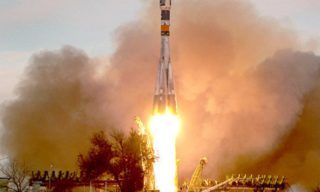
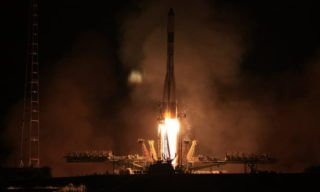
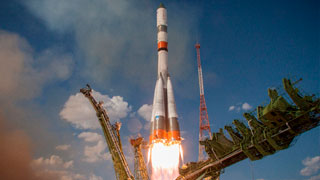
By launching Soyuz TMA-15M spacecraft from Baikonur on November 24 Roscosmos successfully finished manned launch program for 2014.
On the whole there were 4 manned spacecrafts launched for ISS crews change in 2014 (Soyuz TMA-12M on March 24, Soyuz TMA-13M on May 28, Soyuz TMA-14M on September 26 and Soyuz TMA-15M on November 24).
For 2014 Soyuz spacecraft delivered to the ISS 6 Russian cosmonauts, 4 NASA astronauts and 2 ESA astronauts. Four Progress cargo vehicles delivered to the station about 10 tons of various cargoes: propellant, water, oxygen, foodstuffs, materials and equipments for scientific experiments, tools for ISS maintenance, clothes, personal hygiene means, board documentation, video and photo equipment, parcels for the crew members, etc.
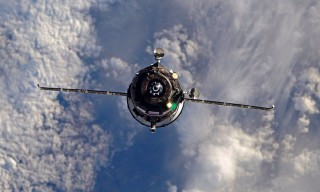
Today spaceport specialists started preparing next manned spacecraft to deliver ISS-43/44 mission crew to the station for the launch. Roscosmos cosmonauts Alexander Samokutyayev and Elena Serova and NASA astronaut Barry Wilmore will get back to the Earth onboard this very spacecraft in March 2015 as well.
Soyuz TMA-16M spacecraft was installed in the test facility of #254 integration building. RSC Energia and Yuzhny space centre specialists reactivate the spacecraft and connect its facilities to the ground test equipment. Upon completion of assemblage the specialists will start electrical testing of Soyuz TMA-16M.
According to the plans Soyuz testing will last up to the mid-December. within this short period of time the spacecraft will pass autonomous and complex testing, and will be checked in anechoic chamber. After that Soyuz TMA-16M will be preserved for a while and the works on this spacecraft will be restarted in February to prepare it for the launch scheduled for March 27.
ISS-43/44 mission crew training for the space flight at the present time comprises Gennady Padalka (Roscosmos), Mikhail Korniyenko (Roscosmos), Scott Kelly (NASA), Alexey Ovchinin (Roscosmos), Sergey Volkov (Roscosmos) and Jeffrey Williams (NASA). During this flight two of the crew members will spend the whole year onboard the station for the first time in history.