August 10, 2020
Categories: Moon, Roscosmos, Russia, Space
Dmitry Rogozin, the general director of Roscosmos, considers it is necessary to carry out launches of automatic spacecraft to the moon annually in order to work out soft landing technologies before sending a manned expedition. “Launches of automatic spacecraft to the Moon should become annual so that we can work out all the technologies associated with landing on the lunar surface and receive safety guarantees during a manned flight to the Moon. If we complete launches of automatic stations in 2025, what guarantees will we have? Will we be able to provide a regular landing of the crew in 2030? ” – said Rogozin.
In 2021, it is planned to send to the moon the first interplanetary landing vehicle Luna-25 in the history of modern Russia. The launch of the Luna-26 orbiter is scheduled for 2024, and the Luna-27 landing station in 2025. After that, it is planned to send a heavy landing station “Luna-28” to the moon to take soil and deliver it to Earth, as well as a station “Luna-29” to deliver a heavy lunar rover. The last two projects are not yet included in any program.
More from this category:
July 20, 2019

Today, on July 20, 2019 at 19:28:21 (Moscow time), a launch vehicle “Soyuz-FG” with a spacecraft “Soyuz MS-13” launched from the site № 1 (Gagarinsky…

full story
May 25, 2015

Roscosmos didn’t announced specified data on Progress M-27M cargo vehicle accident on Friday, Commission well need more time, – space agency press office reports. “Special…

full story
November 20, 2014

Russia and the United States have no plans to end joint scientific experiments on board the International Space Station (ISS), Vice President of the Russian Academy of Sciences Lev…

full story
October 2, 2014

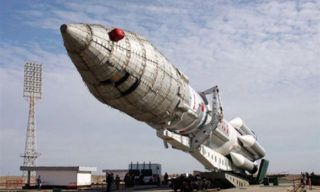
Russia plans to launch six GLONASS navigational system satellites in 2015. All satellites will be launched by Proton-M booster. As Reshetnev information Satellite Systems Vice…

full story
December 6, 2013

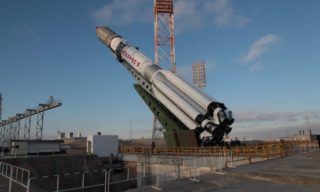
Following the decision of State comission, on December 5 Proton-M launch vehicle with Briz-M upper stage and Inmarsat 5F-1 communication satellite was rolled to and…

full story
October 24, 2013

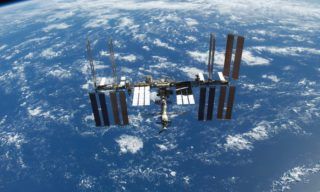
Another ISS reboost maneuver is scheduled for the Thursday, as a result of it the station orbit is to be raised by 900 meters, –…

full story
June 11, 2015

The descent module of Soyuz TMA-15M spacecraft carrying the International Space Station (ISS) Expedition 42/43 crew made a successful landing 148 km to the South…

full story
September 1, 2020

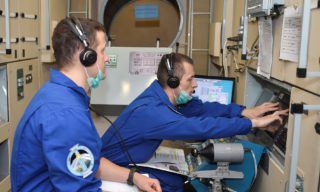
A month and a half before the launch, the main and backup crews of the 64th long-term expedition to the International Space Station began practical…

full story