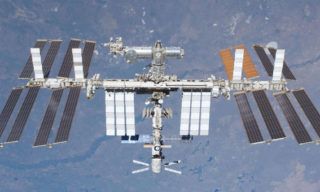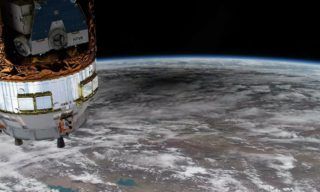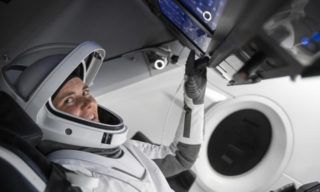


At the Baikonur Cosmodrome, the Progress MS-17 cargo spacecraft processing continues for the launch under the 78th re-supply mission to the International Space Station (ISS).
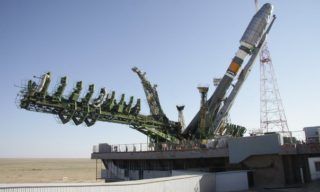
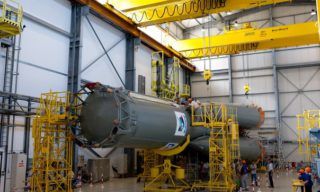
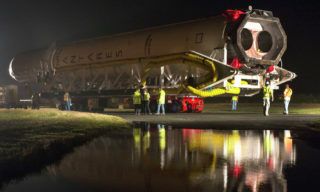
Today, specialists from RSC Energia and core enterprises of Roscosmos have conducted the designers’ inspection of the Progress MS-17 cargo spacecraft at the integration and testing facility and encapsulated it into the payload fairing. After checking the spacecraft launch readiness within the ascent unit, it will be admitted for the final assembly with the launch vehicle in the integration and testing facility of Site 31.
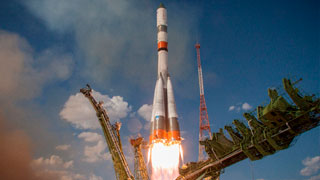
The launch of the Soyuz-2.1a launch vehicle carrying Progress MS-17 developed and produced by RSC Energia is scheduled for June 30, 2021 from Site 31 of the Baikonur Cosmodrome. The spacecraft will deliver to the ISS 470 kg of resupply propellant, 420 liters of potable water in the Rodnik system tanks, 40 kg of bottled air and oxygen, as well as 1,509 kg of various equipment and materials in the cargo compartment including hardware and maintenance aids for the onboard systems, medical monitoring and sanitary and hygienic items, clothing, standard food ratios and fresh products for the ISS-65 Expedition crewmembers. In addition, a set of payloads will be delivered to the station within the Russian scientific and applied research program:
- Neurolab kits are intended to conduct a series of the Pilot-T medical experiments to study the impact of long-duration space missions on the quality of professional activities of cosmonauts;
- Materials of the Korrektsiya experiment are used to develop effective countermeasures of cosmonaut osseous lesion under zero-gravity conditions;
- Biorisk and Konstanta-2 kits serve as a laboratory to study the spaceflight factors impact on the state of complex albuminous compounds and survivability of microorganisms;
- The Probiovit experiment is aimed at development of production technology of pharmaceutical products with immunomodulatory effects under zero-gravity conditions;
- The UF Atmosphere hardware ensures detailed mapping of the global structure of genenschein of the Earth’s atmosphere to study meteorological processes and space weather.