December 5, 2018
Categories: ISS, Roscosmos, Soyuz

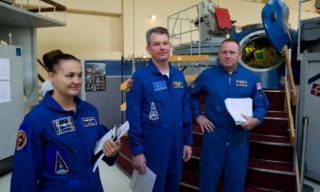
Roscosmos cosmonaut Alexey Ovchinin and NASA astronaut Nick Hague are preparing for a new space flight, which is scheduled for March 1, 2019.

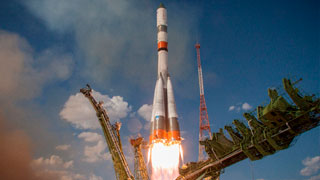
The General Director of Roscosmos, Dmitry Rogozin, announced their flight after the launch of the “Soyuz MS-11” spacecraft .

Due to the abnormal launch of the “Soyuz-FG” launch vehicle on October 11, 2018, the crew of the “Soyuz MS-10” spacecraft could not reach the International Space Station, but almost immediately resumed preparations for the next flight.

NASA astronaut Christina Koch also joined the training sessions of Alexey Ovchinin and Nick Hague.
More from this category:
June 18, 2018

On June 17, 2018 at 00:46 (Moscow time) from the State Test Cosmodrome “Plesetsk” military crew of the Russian Space Forces launched a space rocket…

full story
January 31, 2019

The Institute for Biomedical Problems of the Russian Academy of Sciences continues preparations for the SIRIUS-19 international isolation experiment. Start of the experiment is scheduled…

full story
December 8, 2014

Proton-M booster with Yamal-401 space device will be launched a day earlier: on December 15 instead of December  16, as was planned before, – Roscosmos…

full story
May 15, 2013

Roscosmos invited bid for construction of solar exploration complex. The total of the contract exceeds 30  million US dollars as was stated at Government procurement…

full story
August 26, 2014

The cosmonauts passed the training on Soyuz TMA-M spacecraft manual docking with the ISS on Don-Soyuz simulator. The main crew was the first to pass…

full story
November 17, 2019

PJSC”Proton-PM” (part of the integrated structure of NPO “Energomash”) within the framework of existing contracts conducted a final test of the RD-276 liquid-propellant rocket engine…

full story
May 27, 2013

The launch of Angara light rocket from Vostochny cosmodrome will take place in 2015, – vice Prime Minister Dmitry Rogozin said at the meeting with…

full story
April 12, 2019

The train with the “Proton-M” launch vehicle, the “Briz-M” upper stage, the head fairing and the transition system, designed to launch the powerful geostationary satellite…

full story