
RIA Novosti – A top Russian scientist said Friday that an experiment that saw dozens of animals blasted into orbit on a satellite has offered up new clues about why astronauts’ eyesight deteriorates in space.
Vladimir Sychev, deputy director of Russia’s Institute of Medical and Biological Studies, said the experiment revealed that capacity of the cerebral arteries plummets in space, which accounts for the effect on vision.
“We used to think that in zero-gravity, fluid traveled upward and that the quality of [blood] improved, but it turns out that it is the other way around,” Sychev said. “The arteries of the brain come under duress and their capacity is reduced by 40 percent.”
The institute also gleaned useful information about the impact of space travel on the spinal cord, inner ear and processes at the genetic level, Sychev said.
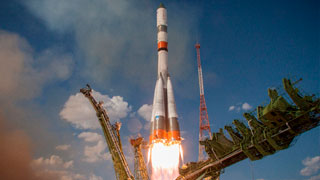
Russia launched the Bion-1M satellite, its first biological research satellite since 2007, on a 30-day mission in April to conduct research on changes to the body while in orbit. The aim of the study was to help pave the way for interplanetary flights, including missions to Mars.
Sychev said the mission was a success although few of the animals sent up returned alive.
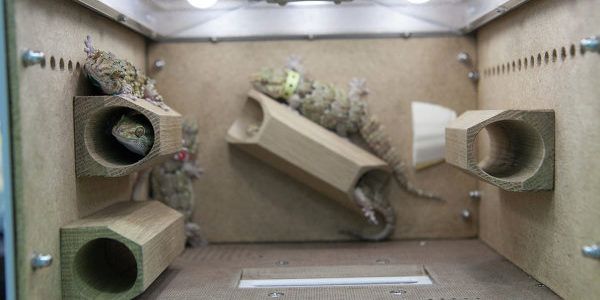
Passengers on the Bion-M1 included 45 mice, eight Mongolian gerbils, 15 geckos, slugs, snails and containers of microorganisms and plants. The flight proved fatal for all the gerbils and 29 of the mice. The geckos, slugs and snails survived.
Sychev said 15 of the mice died within a week of the launch.
“The cause was quite prosaic. A safety barrier malfunctioned,” he said.
Image credit – Institute for Biomedical Problems