

As follows from negotiations between the ISS crew and MCC streamed by NASA on Monday Russian cosmonauts working aboard the station start unloading Nauka multipurpose laboratory module .
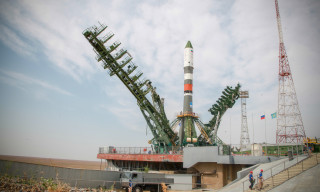
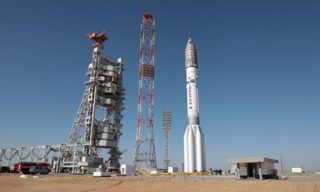
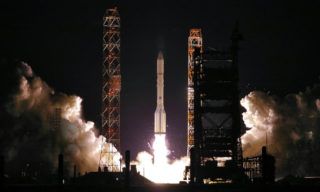
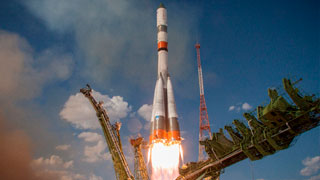
The module was launched from Baikonur by Proton-M booster on July 21 and on Jule 29 docked to Zvezda module of Russian ISS segment. The crew opened the hatch on July 30.
“Then today we’ll start unloading the module earlier”, – Russian cosmonaut Oleg Novitsky said to Mission Control Centre specialist.
On Saturday he posted a video showing that the module is still full of the payloads it delivered to the ISS.
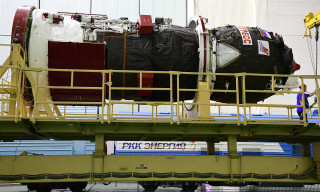
The construction of Nauka started in 1995. Initially Nauka was designed as a ground-based replica of Zarya module. In 2004 it was decided to save money on the construction of new Russian ISS compartment and re-equip the replica turning it into a real module. The launch primarily was planned for 2007 but due to various financial and technical reasons was delayed by 14 years.
Nauka is equipped with sleeping compartment, lavatory, oxygen regeneration system and water recovery system. Besides it has an airlock chamber to install equipment on the outer surface of the station and European ERA manipulator.
The 65thmission crew working aboard the ISS at the present time comprises Russian cosmonauts Oleg Novitsky and Pyotr Dubrov, American astronauts Mark Vande Hei, Sean Kimbrough and Megan MacArthur and Japanese astronaut Akihiko Hoshide (ISS mission commander) and French astronaut Thomas Pesquet.
Currently there are five Russian modules in space: Zarya functional cargo block (its construction was funded by NASA and belongs to NASA, launched in 1998), Zvezda service module (2000), small research modules Poisk (2009) and Rassvet (2010) and Nauka multipurpose laboratory module (2021).
Prichal docking module launch is planned for November 2021.