

The Russian Orbital Station (ROS) plans to perform new tasks that were previously unfeasible. So, for example, the board will manage the satellite constellation. First, the spacecraft will be delivered to the station, and from there – taken to the desired point near the station. Due to the special orbit of the space complex, the ground-based flight control systems will also have to be revised.
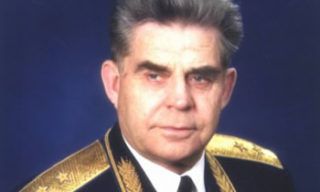
As noted in an interview with TASS, Vladimir Solovyov, general designer of the Russian Federation for manned space systems and complexes, general designer of RSC Energia, and academician of the Russian Academy of Sciences, said that fundamentally new approaches to many onboard systems will be used in the creation of ROS. According to him, the station itself will be digital, it will be equipped with powerful backup systems. “There will be many new tasks that will need to be solved in difficult conditions, as our new station must fly in polar regions, where there is no magnetosphere, where there is a different propagation of radio waves, where there is a negative impact of the ionosphere,” Solovyov explained.
He noted that ROS, compared to the ISS, is created to fly in other, near-polar orbits. The new flight trajectory has its own specifics of control. “Today we have satellite and ground control systems with ground stations on the territory of the country. For ROS they will have to be located differently, it is not an easy task,” Solovyov said.
The academician also said that it is planned to control the ROS flight from the same hall from where the Mir station and previous orbital complexes were controlled. After the decommissioning of Mir in 2001, it has not been used. In addition to this hall, there is a second one in the Mission Control Centre (MCC) near Moscow, from where the ISS flight is now managed and which was created for the Energia-Buran programme. According to Solovyov, after the ISS is decommissioned in 2030, the hall will find a use. “The hall will not be lost, we will think about how to manage other projects from here, for example, the lunar programme,” he said.
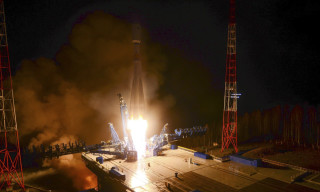
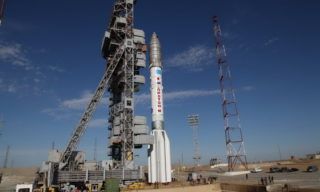
Now Roscosmos is working on the ROS project: on 2 July the general director of the state corporation Yuri Borisov approved the general schedule of its implementation. According to the document, the first in 2027 from the Vostochny Cosmodrome will launch a scientific-energy module. During the next three years, the station’s core will be created by joining three modules: universal node, airlock, and base module. The second stage of assembly will begin in 2031 and will be completed in 2033 – during this time two more target modules will be put into orbit. 608.9 billion roubles have been allocated for the project.
The station will be located in a polar high-latitude orbit with an inclination of 97 degrees – this position will provide a 100 percent view of the entire Russian territory, as opposed to the 10-15 percent currently provided by the ISS. In addition, ROS will allow the observation of the Arctic Ocean water area, as well as the territory of Antarctica.
ROS will be a visited station, not permanently inhabited like the ISS. Most of the time it will operate in automatic mode, and cosmonauts will be there for a short time to connect and adjust scientific equipment, preventive maintenance and repair of onboard systems, and conduct scientific experiments. This station operation mode is significantly cheaper and safer, as it reduces the risk of cosmonauts receiving dangerous radiation doses.