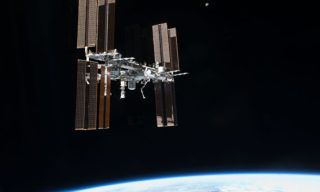


The fifth helium leak has been discovered in the propulsion system of the Starliner spacecraft. Apparently, it began after docking with the International Space Station, when the crew left the much-suffering spacecraft. Now NASA engineers are working feverishly to study the deteriorating not by the day, and by the hour state of the vehicle – because it is approaching the date of its return to Earth scheduled for next week.
The spacecraft took off with three helium leaks (each of which could potentially be critical) and now it has five, most likely impossible to repair in space. The only good piece of news is that the US aerospace agency has been able to report that the leak is supposedly “minor”. The briefing reveals that its rate is “significantly less than others” at 120 grams per square centimetre per minute.
Compared to the third leak (28 kilograms per square centimetre per minute), this is indeed minor but is compounded by its complete unrepairability. In addition, five leaks at once, of which four have opened in just two days raise the question of the overall reliability of the entire power unit of the spacecraft. Meanwhile, the return trip has already had to be rescheduled once, but even the new date of 18 June is very close.
At the moment, NASA’s ground facilities are bustling with work: officials and engineers are working together to try to work out a return plan that “includes an assessment of flight feasibility, fault tolerance, and potential operational deficiencies.” Just before the spacecraft undocks, NASA and Boeing have promised a massive teleconference to announce the most up-to-date information on Starliner’s status.
“What we need to do over the next few days is look at the level of leaks and figure out what we’re going to do regarding the rest of the mission,” NASA official Steve Stich said at the recent briefing.
To reassure the public, NASA has estimated that the helium on board the craft will last for 70 hours of flight time, with only seven hours to return (unless something unforeseen happens – which, considering Starliner’s reputation, is hard to count on). Subsequent flights (there are scheduled to be nine more) are at risk.
Moreover, there are other problems on the ship: one of the engines is disabled by automation and an improperly closed oxidiser flap. It is possible that this list is not exhausted, because NASA does not always provide journalists with complete information. In general, the scale of the risk that Butch Wilmore and Sunita Williams will take if they again board the much-suffering spacecraft is still unclear.