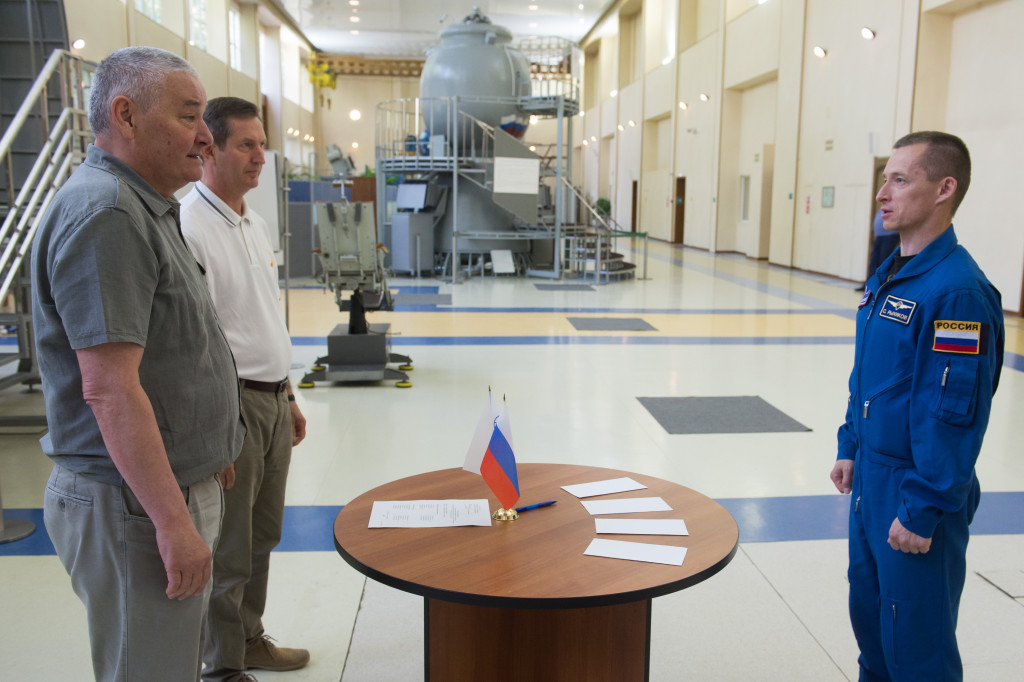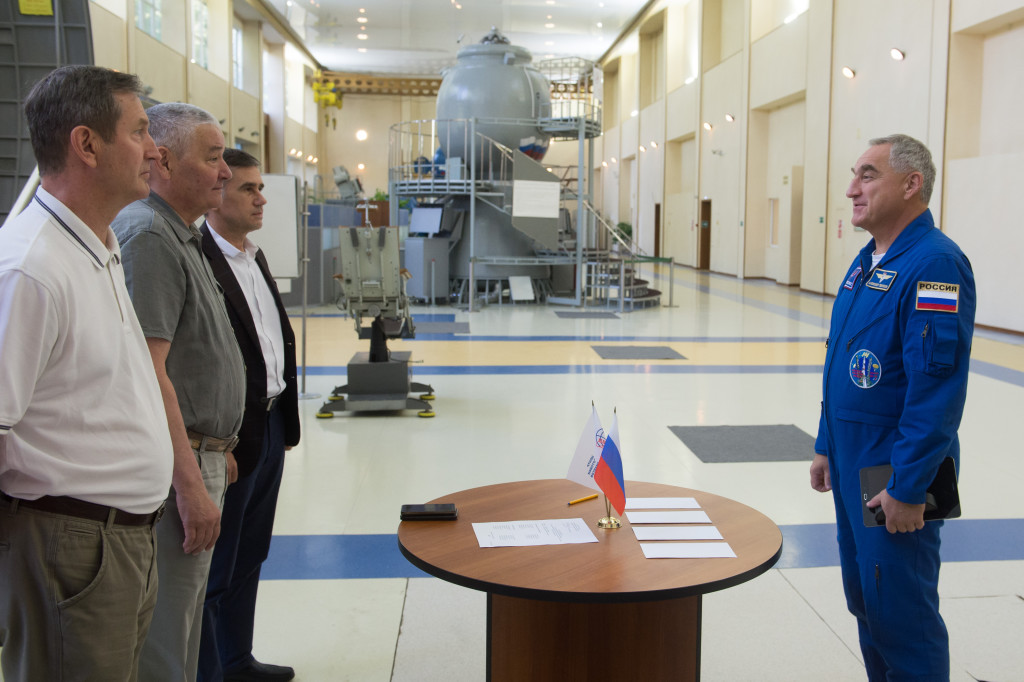

After passing the theoretical examinations, the ISS-60/61 crews began practical tests on simulators.
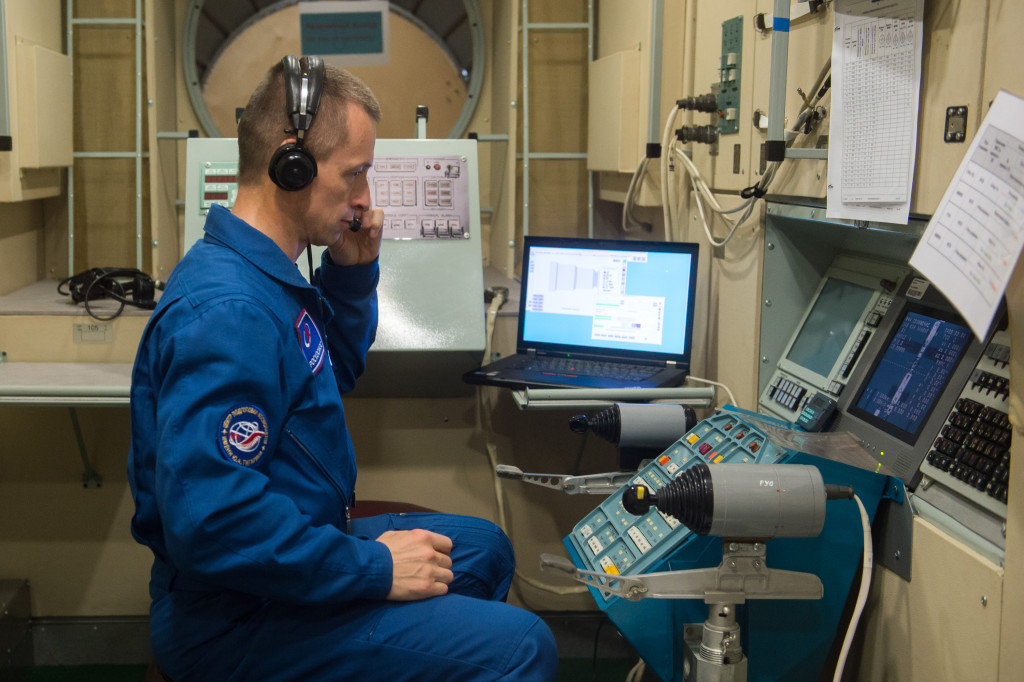
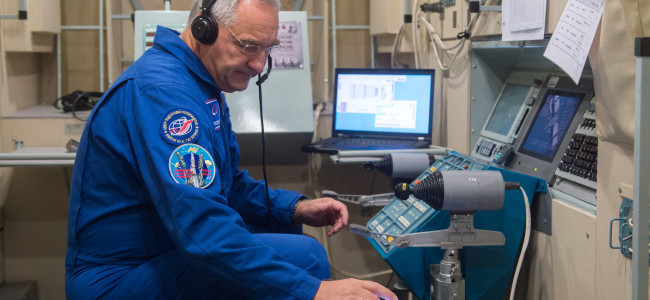
Today, the commanders of the main and backup crews of the “Soyuz MS-13” sapcecraft Alexander Skvortsov and Sergey Ryzhikov passed the examination exercises on the specialized “Teleoperator” simulator for testing the teleoperative control of the “Progress MS” cargo spaceship.
Normally the docking of cargo ships to the ISS occurs automatically.
However, the crew must always be ready to take control.
Cosmonauts are trained in the modes of teleoperator control of the spacechipPAG for maintaining and improving skills.
Each examination ticket contains four modes, two of which are in the light, and two – “in the shade”.
The cosmonauts works out the docking of the spaceship to the four docking stations of the ISS – these are CO-1 (“Piers” docking compartment), SM (“Zvezda” service module), MIM-1 (“Rassvet” small research module) and MIM-2 (“Poisk”).
All modes begin from the automatic “freezing” of the ship at a distance of about 150-160 meters from the station.
Next, abnormal situations are introduced, leading to the disruption of the automatic mode and the transition to the manual control mode.
During manual operation, failures and accidents are also possible.
The first group of emergency situations include, for example, the automatic moving of the ship from the station or the accident of the spaceship control system.
In the manual mode, cosmonauts can also expect abnormal situations, such as a brief disappearance of a TV image from a spaceship, the failure of manual controls or a break in communication between the ship and the station.
The commanders of the main and backup crews of “Soyuz MS-13” spacecraft brilliantly passed the task, having received excellent marks on the exam.
The Commission, chaired by Valery Korzun, Head of the 1st Department of the GCTC, Hero of the Russian Federation, Pilot-Cosmonaut of the Russian Federation, noted the clarity of reporting and determining the relative motion parameters of “Progress MS” spacecraft and the ISS, as well as confident and competent actions of operators.