

Russian cosmonaut Oleg Kononenko has become the world’s first person to spend a total of 1,000 days in Earth orbit. The record was set tonight. Kononenko is now onboard the ISS, and when he returns to Earth in September, the total duration of his space flights will be 1,110 days.
The record was set on 5 June at 00:00:20 Moscow time, the press service of Roscosmos said. For the commander of the cosmonaut squad Oleg Kononenko the current space flight is the fifth in his career. He left for the International Space Station on 15 September 2023 and is expected to return to Earth on 23 September.
This is not Kononenko’s first achievement this year: On 4 February, he became the world’s first in terms of total duration of space flights, breaking the record of another colleague, Gennady Padalka, who stayed in space for a total of 878 days, 11 hours 29 minutes and 48 seconds.
As Kononenko noted in a comment to the TASS agency, the new record of staying in outer space for 1000 days will be important for the development of space medicine and preparation for future interplanetary missions. For example, specialists will be able to track how such a long stay in weightlessness affects the human body and develop certain recommendations based on the knowledge gained.
The Russian cosmonaut also shared that the achievement makes him proud of the work he has done and also motivates him to continue doing what he loves. “On the one hand, for me 1000 is a number showing the total number of days of my work in space. On the other hand, there is the realisation that you have achieved something important, new, overcome a certain milestone, touched the unknown,’ Kononenko said.
The commander of the Roscosmos cosmonaut squadron also said that his American colleagues were the first to congratulate him on setting the record. “The crew of the American segment of the station and the MCC in Houston were the first to congratulate me.
Foreign colleagues closely followed when the fact of a thousand days will be accomplished, because they consider this event a significant milestone for the entire world cosmonautics,’ the cosmonaut said.
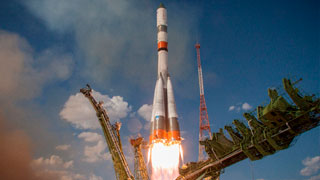
Now the crew of the 71st long-term expedition – cosmonauts of Roscosmos Oleg Kononenko, Nikolai Chub and Alexander Grebenkin, NASA astronauts Matthew Dominik, Michael Barratt, Janette Epps and Tracy Dyson are currently working on the ISS. Last week, the Russian cargo ship Progress MS-27 arrived at the station, delivering more than 2.5 tonnes of various cargoes, including gifts for the upcoming birthdays of two cosmonauts – Oleg Kononenko and Alexander Grebenkin.