November 2, 2020

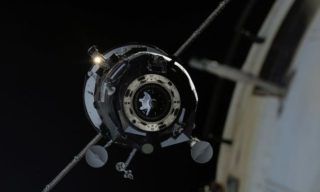
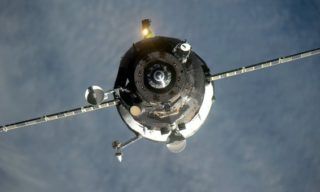
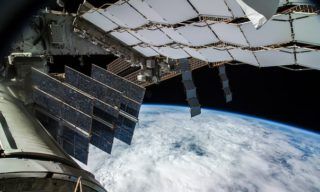
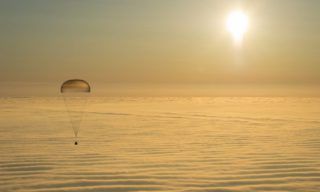
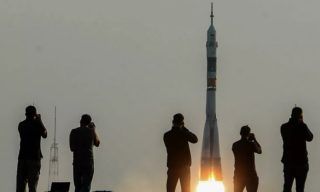
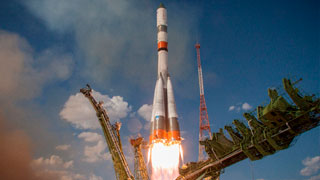
Twenty years ago on November 2 the first  long-duration space mission crew arrived aboard the ISS. Russian cosmonauts Yuri Gidzenko and Sergey Krikalyov and American astronaut William Shepherd became the first habitants of this unique orbital home, their Soyuz TM-31 spacecraft was launched from Baikonur on October 21, 2000.

This marked the beginning of new space era of space exploration and international cooperation in space.

For this 20-years period, 241 cosmonauts and astronauts from 19 countries and seven space tourists have visited the station. Any of them made a contribution to stations design and development, took part in numerous scientific researches and educational investigations.

Currently it is ISS-64 mission crew comprising Roscosmos cosmonauts Sergey Ryzhikov and Sergey Kud-Sverchkov and NASA astronaut Kathleen Rubins working aboard the ISS.
More from this category:
April 29, 2014

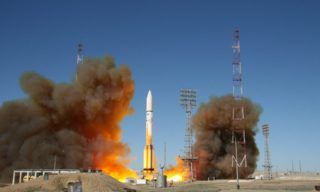
Russian Luch-5V and Kazakh KazSat-3 satellites orbited on Monday operate nominally, JSC Reshetnev Information Satellite Systems representative reports. Proton-M booster with Luch-5V and Kazsat-3 satellites…

full story
July 9, 2014

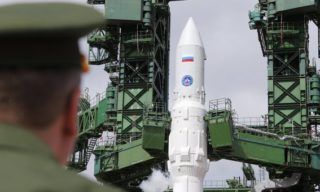
Russia performed the first test launch of new Angara-1.2PP light booster, the first ecologically friendly booster that has been designed since USSR collapse, – the…

full story
February 18, 2015

On February 17, 2015 at 19.57, Moscow time Progress M-26M cargo vehicle successfully docked with Zvezda service module of Russian ISS segment. Operations on automated…

full story
June 30, 2015

Stock of food and water stored onboard the ISS will enable the crew to wait for the next Progress M-28M cargo vehicle arriving on July…

full story
May 6, 2015

On Wednesday morning Progress M-26M cargo vehicle docked to the ISS increased medium altitude of station’s orbit by 2 km, – spokesman for MCC reported. Progress…

full story
March 12, 2015

Today on March 18 ISS-41/42 crew comprising Roscosmos cosmonauts Alexander Samokutyayev and Elena Serova and NASA astronaut Barry Wilmore successfully returned to the Earth onboard…

full story
July 7, 2020

The first launch in six years of the new-generation navigation satellite Glonass-K from the Plesetsk cosmodrome is scheduled for August. “The satellite’s delivery to the…

full story
June 6, 2014

According to official information Proton-M with Exprss-AM4R satellite crash was caused by the breakage of 3rd stage control thruster turbopump bearing, Interdepartmental Commission Head Alexander…

full story