February 26, 2014
Categories: ISS, JAXA, Roscosmos, Science

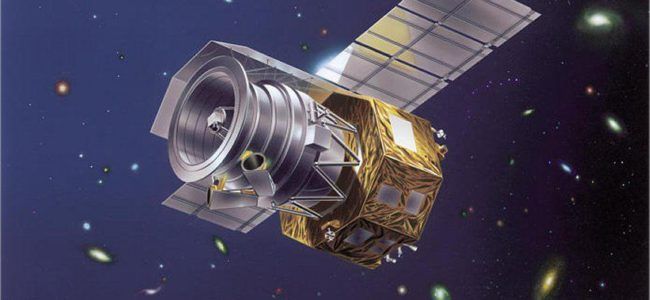
Roscosmos and JAXA representatives started working on Russian and Japanese space telescopes projects uniting.

Both telescopes are designed to explore extragalactic space rays. The devices supposed to be installed on the ISS have to record glowing tracks formed by high-energy particles entering the atmosphere. The main object to be explored will be ultimate energy particles (that is the particles with GZK limit energy).

The key difference between the two telescopes is that JEM-EUSO will use lenses for focusing while the Russian one form the picture with the help of a mirror. The joint project will combine these approaches with Japanese party represented by RIKEN Institute developing optical devices and image sensors at that and Russian party creating the mirror and other parts of the telescope.

According to the senior scientist of Institute of Nuclear Physics of Lomonosov Moscow State University Pavel Klimov the details of the program how to unite two independent projects are being developed at the present time by joint working group. The most conservative variant of program implementation stipulates for full-size mirror being the main part of the telescope while the lens increasing the viewing angle from 7 to 14 degrees will be installed between the mirror and photon detector. The other variant suggests dividing the device into three separate telescopes thus increasing the view.

The dates of device launch to the ISS are not stated yet and the final plan of the project is not confirmed either.
More from this category:
April 1, 2014

Roscosmos Head Councellor, Hero of Russian Federation, cosmonaut Yuri Lonchakov was officially appointed to the position of GCTC acting head, – Roscosmos press-office secretary Irina…

full story
April 4, 2014

On Thursday International space station performed a maneuver to avoid collision with the old European booster’s Ariane 5 debris, – NASA reports. According to specialists…

full story
June 6, 2014

According to official information Proton-M with Exprss-AM4R satellite crash was caused by the breakage of 3rd stage control thruster turbopump bearing, Interdepartmental Commission Head Alexander…

full story
May 24, 2020

On May 22, 2020 at 07:31 UTC the Russian Aerospace Forces operational crew successfully launched the “Soyuz-2.1b” carrier rocket with a Ministry of Defense spacecraft…

full story
April 16, 2020

Onboard the International Space Station, the 62nd long expedition is completing. The crew members of the “Soyuz MS-15” manned spacecraft – Roscosmos cosmonaut Oleg Skrypochka,…

full story
June 8, 2015

Launch schedule of Proton boosters will be announced next week, – Khrunichev Centre head Andrei Kalinovsky said the journalists on Monday. The schedule may be…

full story
December 7, 2020

The second test launch of Angara-A5 heavy booster is planned for December 14 morning, – the source reported. Initially the launch was planned for November…

full story
July 15, 2014

The first after May crash launch of Proton heavy booster is planned for September 28, 2014, Roscosmos head Deputy Alexandr Ivanov reported. “According to the…

full story