
Ahead of the ISS-63 crews are complex examination exercises.
Before cosmonauts and astronauts need to undergo a typical flight day training.
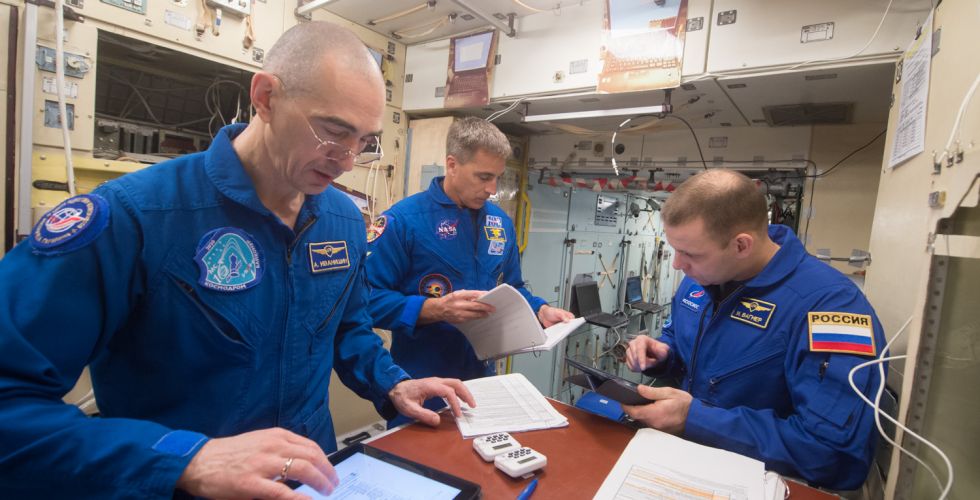
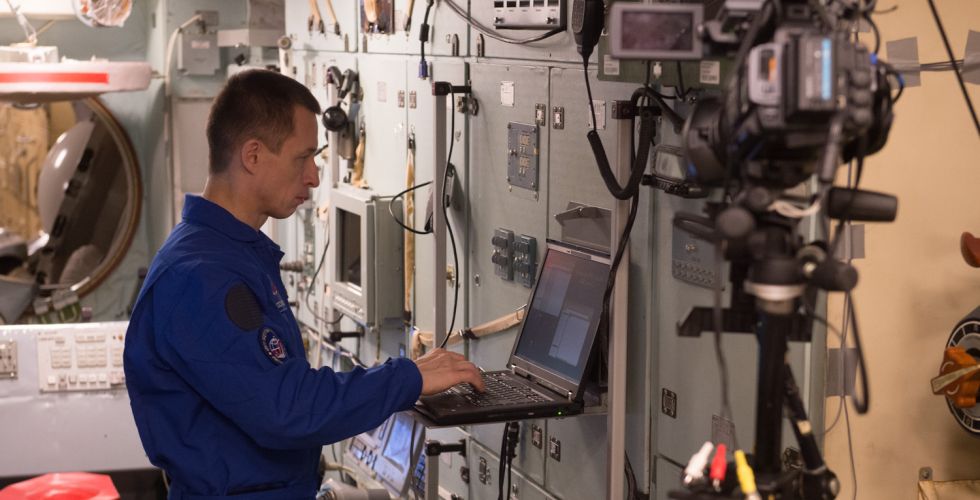
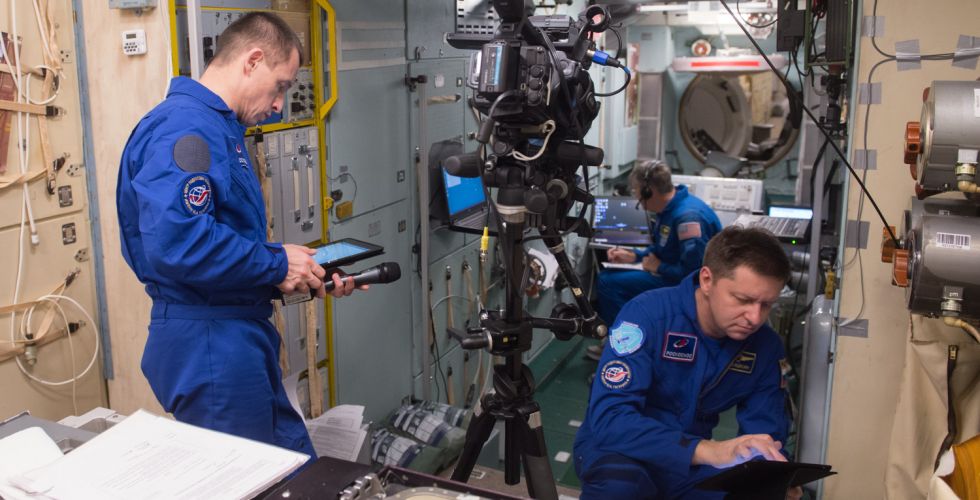
This is a “test exam”, according to which the crews spend a full day on the simulator of the Russian segment of the International Space Station with possible normal and emergency situations.
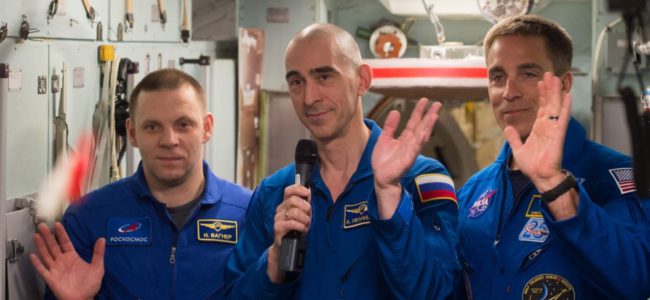
On March 4-5, 2020, the main crew (Roscosmos cosmonauts Anatoly Ivanishin, Ivan Wagner and NASA astronaut Christopher Cassidy) and backup crew (Roscosmos cosmonauts Sergey Ryzhikov, Andrey Babkin and NASA astronaut Stephen Bowen) completed this training.
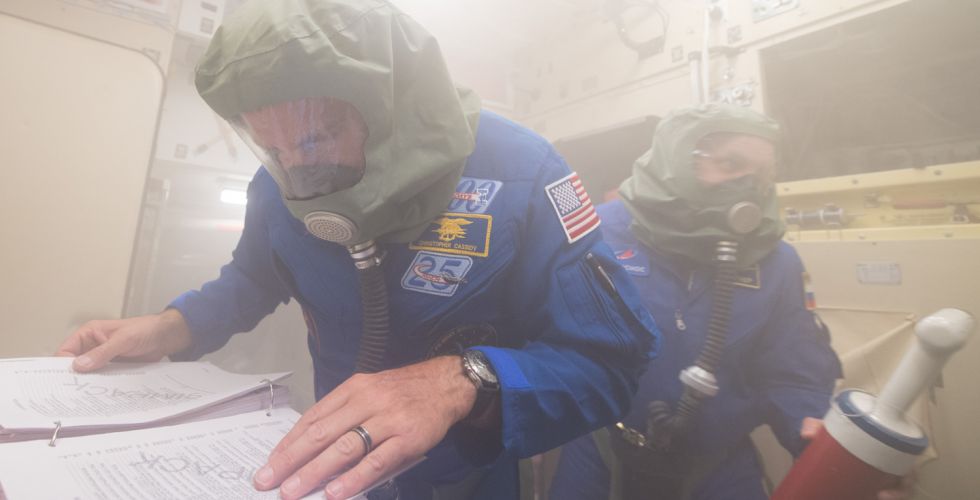
Among emergency situations, that the cosmonaut or the entire crew may encounter, for example, communication failure, malfunction of the life support system, sewage system, airborne computing system.
Among the emergency situations, that trainers usually reserve at the end of the “working day” may be depressurization, fire or ammonia leak.
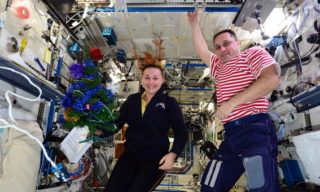
During the “Typical Flight Day” the crew, as in real life, uses all the modules of the Russian segment.
Thanks to this “working day” at the station, cosmonauts and astronauts can feel the rhythm in which they have to live in space.
In addition, this helps to consolidate skills in performing actions on the cyclogram and allows foreign crew members to better know the systems of the Russian segment of the International Space Station.
The cosmonaut’s working day began with an inspection of the station and a conference with the Mission Control Center, during which they reported on the state of the segment and their health.
Then they were engaged in the maintenance of station systems, repair and restoration work, the maintenance of an inventory base, and experiments in different directions.
At the end of the training, the actions of each crew were evaluated by the commission.
It noted, that the cosmonauts and astronauts have successfully completed their tasks and are ready to pass the complex examination exercises on March 11 and 12, 2020.