February 24, 2021

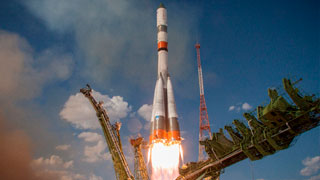
As part of the four GRUS spacecraft (GRUS-1 B, C, D, E) pre-launch processing, the Axelspace’s (Japan) team completed software tests, charged onboard batteries, checked propulsion systems and propellant tanks. As of today, all the four spacecraft are ready for mating with the upper stage.

Since 2015, Axelspace started building up AxelGlobe, the next-generation Earth observation platform, consisting of multiple microsatellites to cover various parts of the world with high frequency. The 4 satellites (GRUS-1B, 1C, 1D, 1E) to be launched this time will be part of the AxelGlobe and this will be the second launch, after the launch of GRUS-1A in December 2018.

High-frequency monitoring will be a reality with the launch of 4 GRUS this time, as AxelGlobe will be operated with 5 satellites, providing up to 1.4-day revisit rate for mid-latitude region, including Japan, and 3-day revisit rate for low-latitude region. This will allow for the full-scale introduction of the imagery data service and the company plans to actively provide solution proposal activities based on the client needs for various industries, including agricultural usage, which requires high revisit rate, and business continuity plan support service, which we have already announced.
More from this category:
May 27, 2019

Today in the morning, the “Proton-M” launch vehicle with the “Breeze-M” upper stage and the Russian “Yamal-601” communications satellite was rolled out to the launch…

full story
January 26, 2022

The Japanese company Axelspace Corporation has signed a contract with GK Launch Services (a subsidiary of Glavkosmos, part of the Roscosmos State Space Corporation) for…

full story
October 17, 2014

On October 16 Gagarin Cosmonaut Training Centre saw General Medical Board meeting that analyzed the data gained in the result of Russian ISS-42/43 mission crew…

full story
June 6, 2014

Russian Soyuz-ST boosters with European satellites will be launched from equatorial Kourou spaceport in French Guiana in June and July 2014. The launch of Soyuz-ST…

full story
October 31, 2018

According to the information from TASS News Agency, the cause of the “Soyuz-FG” rocket accident, that occurred on October 11, was the abnormal operation of…

full story
July 19, 2013

The launch of Proton-M booster with DM-03 upper stage and Glonass-M space devices took place from 81 launching pad of Baikonur Spaceport on July 2,…

full story
April 20, 2015

Progress Rocket and Space Centre started assembling Soyuz-2.1a  that is to be the first booster launched from new Russian spaceport Vostochny in Amur region. The…

full story
February 12, 2016

Proton-M booster to launch space devices in the framework of Russian-European ExoMars-2016 research mission was delivered to Baikonur spaceport. “Proton-M booster designated to launch Schiaparelli…

full story