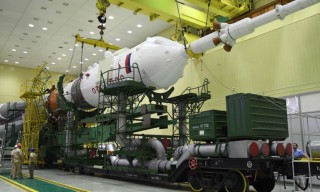
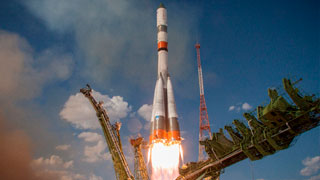


Active preparations continue at the Baikonur Cosmodrome for the Soyuz MS-19 crewed spacecraft launch under the International Space Station program. This morning, on October 1, 2021, in accordance with the decision of the State Commission the launch vehicle Soyuz-2.1a was rolled out to Site 31 launchpad.
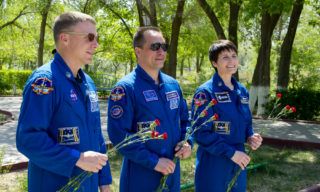
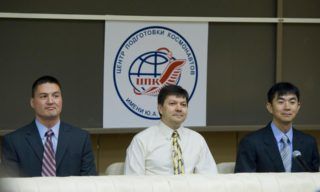
Specialists from subsidiaries of Roscosmos began transporting the rocket from the assembly and testing facility at 02:30 UTC (07:30 local time). Traditionally, the backup crew watched the rollout process. In the morning, the bus with Roscosmos cosmonaut Oleg Artemyev, cameraman Alexey Dudin and actress Alena Mordovina left from the Cosmonaut Hotel. Despite the current restrictions at the Baikonur Cosmodrome, the backup crew tradition continued.\
‘This is incredibly beautiful, the rocket is amazing, a lot of impressions. Of course, I wish I could have seen it better, but the train with the rocket was moving fast enough. It seemed huge, and when it began to move away, it became small. But the feeling that people use it to do great things never left’, said Alena Mordovina.
‘The most impressive moments of training at Baikonur for me were the first and final try-on of the Soyuz MS-19 spacecraft. This is the very ship that will deliver the crew to the orbit. We had to inspect it and accept it. And of course the rocket rollout is unforgettable. We were able to see the spacecraft fully assembled on its way to the launchpad, a definitely milestone event,’ said Alexey Dudin.
After verticalization of the rocket and service structure arms raised, a joint crew of the Baikonur Cosmodrome began to work according to the first launch day schedule. After docking the rocket communications with ground equipment, autonomous testing will be carried out to check the spacecraft systems and components, the launch vehicle and launch complex. The results will be included in the report.
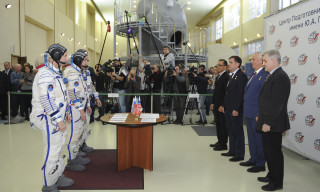
The Soyuz MS-19 crewed spacecraft launch is scheduled for October 5, 2021 at 08:55 UTC from the Baikonur Cosmodrome. The ISS-66 crew is to work in orbit for 174 days, while the mission’s spaceflight participants will stay at the ISS for at least 12 days. The ISS-66 prime crew are Roscosmos cosmonaut Anton Shkaplerov, film director Klim Shipenko and actress Yulia Peresild.
Soyuz-2.1a is a three-stage medium class rocket, a modified version of the Soyuz-U rocket. It is designed to support launches of spacecraft for military, national economy and social purposes.
The launch vehicle was developed and is manufactured at Progress Space Rocket Center (Samara, part of Roscosmos). It is equipped with a new digital control system common to all three stages, as well as a new digital radio telemetry system. The digital control system on the Soyuz-2 launch vehicle has improved the launch accuracy, stability and controllability of the launch vehicle, and allowed the use of large fairings.