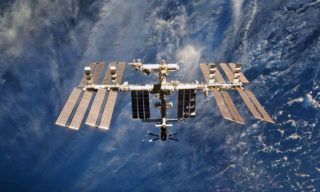
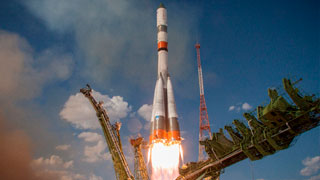


The popular science festival “VNauke”, organized by VK and dedicated to space and the future of mankind, started at VDNKh in Moscow. Russian cosmonaut and military pilot 2nd class Andrei Fedyaev talked about what cosmonauts dream about, how Soyuz differs from Crew Dragon, and what instruments the ISS crew plays.
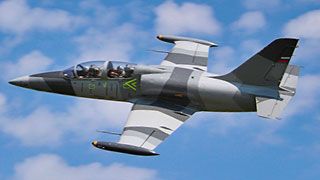
By his admission, Andrey Fedyaev – the second Russian to fly on Crew Dragon – joined the military pilots specifically to become a cosmonaut in the future. There was only one alternative path at the time – to become an engineer. But a pilot (as the audience readily agreed) is a much more romantic profession. According to the cosmonaut, it is difficult to compare the feeling of lifting into the air a multi-ton machine, which represents the peak of development of all scientific and technical thought of mankind at this historical moment.
In total, before joining the cosmonaut squadron Andrei Valeryevich flew more than 500 hours – mostly at the helm of the Il-38 anti-submarine airplane. Although finding a submarine in the depths of the world ocean “is more difficult than a needle in a haystack”, the future cosmonaut coped with this task successfully: “tracking [of enemy missile carriers] was repeatedly carried out. And destruction, thank God, has not had to”.
The first time in the selection in the squadron Fedyaev participated in 2010, but then it was, in his own words, “reconnaissance by combat”. The pilot did not hope for anything and the rejection was not a reason for disappointment. But for the second time, he prepared so that he “not leave a chance for the Commission not to accept him in the astronaut squadron”. And so it happened.
Training in the squadron, of course, is strikingly different from flying. The cosmonaut, as Fedyaev emphasized, is first of all a universal person, simultaneously “an electrician, a plumber, a scientist and so on”. By the end of training, a cosmonaut can disassemble and repair any device – of those on the ISS.

The same goes for the spacecraft. “Soyuz” their future passengers study ‘to the last rivet’ – in these ships traditionally a high level of involvement of the crew in the management. Cosmonauts regularly have to perform many functions on their own, up to manual docking.
But Crew Dragon is, by and large, a “space cab”. According to Fedyaev, inside it, you feel more like a tourist than an astronaut, as most of the functions are automated (but there is no sense of control over the situation either). Nevertheless, even American astronauts are obliged to study Soyuz and the structure of the Russian segment of the station to be able to navigate there in case of emergency. Just like the Russians undergo training in Houston.
At the same time, many foreign cosmonauts study the Russian language with pleasure. Some speak it so well that they can even sing. Thankfully, the ISS currently has three guitars, and a synthesizer, and Andrei Fedyaev specifically asked permission to take there his harmonica: “for the orchestra is lacking, perhaps, only the organ”.
At the same time, the most common thing among astronauts – mutual teasing. For example, during training in Houston Fedyaev heard a question from American colleagues: “Andrei, do you know Jimmy Beams?” “Is that some American actor?” – asked the Russian, to which the Americans burst into laughter. It turned out they were referring to the popular Jelly Beans candy they wanted to take with them to the station. The members of Crew 6 remembered this incident with a smile throughout the flight. And the candy beans were shared, of course.
Anyway, the annual flight went smoothly, without any dangerous situations. Even dreams, according to Fedyaev, were the most ordinary. But many of his colleagues, it turns out, had a very similar dream – how they, walking on Earth, meet an acquaintance, and he asks with bewilderment: “What are you doing here? You’re in space!”
However, this, as emphasized by the astronaut himself, most likely just auto-programming: someone told about such a dream to colleagues, and some of them subconsciously convinced themselves that they should also see something similar. As a result, the monotonous dream spread around the ISS, “like a plague of some kind”.
Anyway, despite occasional mild conflicts and highly unusual conditions, the environment on the ISS is “extraordinarily friendly.” National, linguistic, cultural, and other differences do not prevent the crew from doing common work together. As Andrey Fedyaev noted: “Space is ours! In the sense of all mankind”.