September 2, 2013
Categories: ESA, GCTC, ISS, Roscosmos, Science

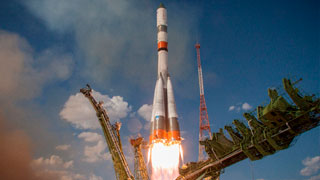
In the nearest future European Space Agency (ESA) and Roscosmos will sign agreements on joint implementation of scientific experiments onboard the ISS for 2017-2018, the Head of Astronautics and ISS Science Operation Department Martin Zell told  journalists at MAKS-2013 Airshow on Friday.

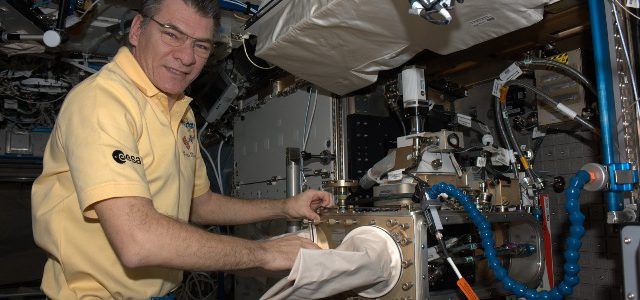
According to him at the present time there are 11 joint European-Russian science experiments being carried out onboard the ISS, some of them are still at the first stages of implementation, others are being developed for quite a long time.

“Besides currently we have 14 long-term experiments being at the initial stage of implementation. For some of them science protocols are already signed and the equipment is ready. In two weeks ESA and Roscosmos will sign agreements on joint implementation of new group of scientific experiments for 2017-2018. Every experiment needs a separate agreement”, – Zell stated.

Among new experiments there will be Brain-DTI experiment aimed to explore space impact on central nervous system using magnetic-resonance tomography methods, – he specified.

Moreover there will be experiments exploring space impact on cognitive and motor functions of the human, Russian Gagarin Cosmonaut Training Centre equipment will be used to carry out these experiments.

Zell reported that there also will be an experiment studying human cardiovascular and pulmonary system under space conditions, – RIA-Novosti reports.

Image credit – Roscosmos
More from this category:
September 12, 2013

Plesetsk spaceport is ready for the launch of Soyuz-2.1v light booster, – Aerospace Defense troops Commander Alexander Golovko reported on Thursday. “According to the place…

full story
June 5, 2013

European space agency discusses with Roscosmos the possibility of Europe participation in Russian Oka-T orbital laboratory that may be launched in 2016-2017 project, – Tomas…

full story
July 1, 2019

At the Baikonur cosmodrome intensive works continues on the upcoming launches of spacecrafts to the International Space Station (ISS), which are scheduled before the end…

full story
June 6, 2014

Russian Soyuz-ST boosters with European satellites will be launched from equatorial Kourou spaceport in French Guiana in June and July 2014. The launch of Soyuz-ST…

full story
July 15, 2014

The first launch of Angara heavy booster with a satellite will take place in 2016-2017, Roscosmos head deputy Alexander Ivanov reported. “First Angara boosters for…

full story
May 15, 2013

Roscosmos invited bid for construction of solar exploration complex. The total of the contract exceeds 30  million US dollars as was stated at Government procurement…

full story
May 13, 2019

The GLONASS national navigation satellite system will receive five new satellites in 2019. This is stated in the GLONASS Development Strategy until 2030, reports TASS…

full story
June 5, 2019

On 4 June 2019, in accordance with the flight program of the International Space Station (ISS), the “Progress MS-10” cargo spaceship, having completed its mission,…

full story