
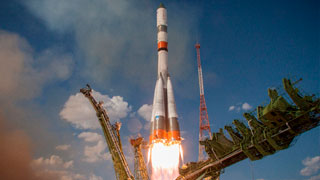


Semikatov automatics scientific development and production centre started developing key elements for newest control system for boosters including Soyuz series, – Roscosmos reports.
By 2020 we will develop instrumentation enabling to improve the accuracy of orbit injection. These works are being accomplished according to the agreement between Roscosmos State Corporation and Semikatov centre signed in the frameworks of Federal Space Program implementation for 2016 – 2025, – was stated in the official message.
Today we are developing key elements of most up-to-date control system for new boosters. This is an entire onboard complex including digital computing device to be the core of control system. Code name of this device is Malakhit-8, the specialists are conducting design and experimental works and plan to finish the prototype by 2018, – Semikatov Centre Director general Andrei Misyura pointed out.
In April 2017 we’ll complete design studies. The design of parts of the standard modules is to be finished by the end of 2016. Hardware components are to be produced by Micron plant located in Zelenograd.
Fundamental distinctive features of the new board computer are as follows: performance – 300 million operations per second, weight – less than 3 kg. Malakhit-7 computing device that is being used of Soyuz-2 series boosters weights 7 kg while its performance is 40 million operations per second.
As a result we’ll get a complex of universal means to be applied in all future developments including aircraft engineering. Increase in onboard computing device performance will provide for control response and increase the quantity of tasks to handle and improve the maneuverability of space device and the accuracy of orbit injection, – Roscosmos highlights.







Latest news:

Jul 2, 2025