

Roscosmos formed working group headed by Oleg Ostapenko. The group is to find a solution and basis for future developing and design of Russian super-heavy booster within several weeks, – working group member Oleg Baklanov reported.
“We hold a meeting headed by Oleg Ostapenko, that gathered all our enterprises heads. We created the working group headed by Oleg Nikolayevich. Within several weeks it is to find the way to achieve the results we showed in 1988 when Energia-Buran was launched and when we set 100 tons into support orbit, – the Minister of General Engineering of USSR in the years 1983-1988, Baklanov told at the formal meeting dedicated to 25th Energia-Buran launched anniversary.
In his turn Ostapenko said that the goals set surely may be achieved but connection between generations is needed. According to Roscosmos Head there is a young generation and followers able to complete all the tasks.
“Our country has great possibilities. We just have to give the necessary opportunities to the people who can do their best. I believe we’ll succeed. Government authorities support us, they understand our tasks, – Roscomos Head added.
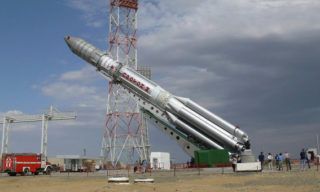
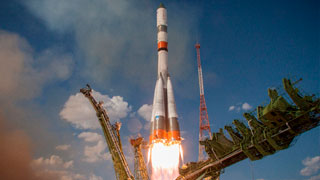
It was reported earlier the RSC Energia suggests creating new super-heavy booster with 70 tons payload capacity on the basis of the world’s most powerful Energia booster. New booster is to be able to set satellites into the geo-transitional orbit (when using upper stages if the weight of the satellite amounts up to 8 tons) and geostationary orbit (satellites weighting 5 tons), set space station modules into low-Earth orbit (about 20 tons).
Heavy booster may be designed for the launches from future Vostochny spaceport in Amur region. There are two variants of the booster to be developed– 2-stage and 3-stage. They will be developed on the basis of Angara booster.