March 24, 2014

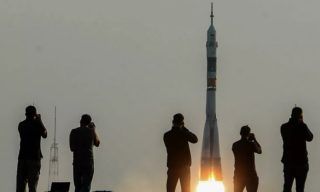
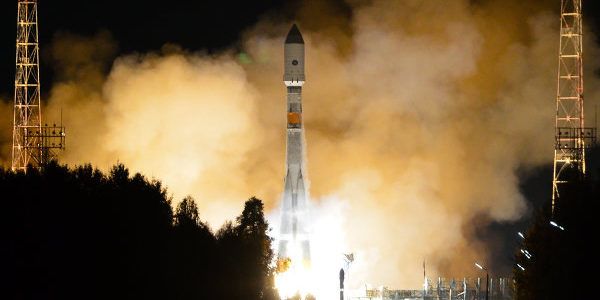
A Russian Soyuz rocket launched a Glonass navigation satellite into orbit early Monday morning from northwestern Russia, a spokesperson for the country’s aerospace defense forces said.

The Soyuz-2.1b took off at 2:54 a.m. Moscow time from the country’s northern Plesetsk space center, inserting a Glonass-M satellite into orbit where it is now functioning normally, Colonel Alexei Zolotukhin said.

Russia’s space-based Glonass navigation system, with over two dozen satellites currently in orbit, provides global high-precision coverage for military and civilian devices, including smartphones such as the latest Apple iPhones.

The launch was the third of a Glonass satellite from Plesetsk, most prior satellites having been launched aboard Proton rockets from Kazakhstan’s Baikonur space center.
More from this category:
August 20, 2014

The meeting of State Commission held today in GCTC analyzed the medical data of main and ISS-41/42 mission  main and back-up crew Russian cosmonauts. The…

full story
September 23, 2014

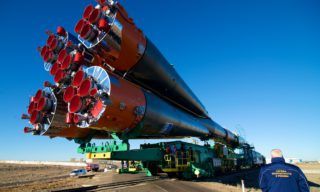
Today, on September 23, 2014 Soyuz-FG booster with Soyuz TMA-14M spacecraft was rolled-out to #1 launchpad (Gagarin launch). After the booster was installed and service…

full story
July 22, 2014

According to prelaunch preparations schedule Soyuz-U with Progress M-24M cargo vehicle was rolled out to #1 launching pad of Baikonur spaceport (Gagarin launch). The launch…

full story
September 23, 2021

The launch of Express-AMU2 and Express-AMU7 telecommunication satellites initially planned for November shifted to December, – the sources stated. In June acting Director General of…

full story
August 6, 2014

53 years ago Soviet cosmonaut German Titov performed the spaceflight lasting for 24 hours for the first time in World history. On August 6, 1961…

full story
July 21, 2020

The crew of the 64th long-term expedition to the International Space Station will undergo joint training at the Cosmonaut Training Center in preparation for the…

full story
April 8, 2013

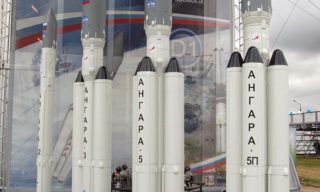
“The construction of launchpad for Angara heavy booster may start in 2015 instead of 2016 as was planned earlier, – Roscosmos Head Vladimir Popovkin stated….

full story
June 13, 2013

The life of human in space is very much different from life on the Earth’s surface. The greatest difference is of course the weightlessness effect….

full story