September 11, 2013
Categories: Soyuz

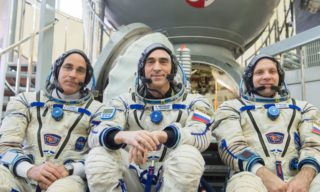
On September 10, 2013, 23.35 UTC (September 11, 2013, 03.35 Moscow time) Soyuz TMA-08M with Pavel Vinogradov, Alexander Misurkin and Christopher Cassidy onboard undocked from the ISS and started its way back to the Earth.

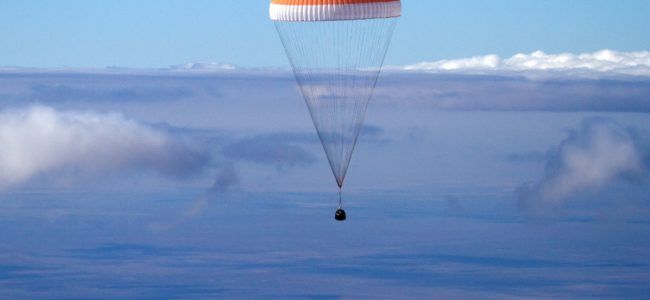
On September 11, 2013, 02.58 UTC (06.58 Moscow time) decsent module of Soyuz TMA-08M spacecraft successfully landed 146 km to the South East from Zhekazgan town in Kazakhstan. The crew feels good. Total mission duration amounts to 166 days, 6 hours and 15 minutes.

More from this category:
September 18, 2013

On September 17 Roscosmos cosmonauts Alexander Skvortsov and Oleg Artemyev with their colleague from NASA astronaut Stephen Swanson made Baikonur sightseeing tour in accordance with…

full story
April 3, 2013

According to press service of Gagarin Cosmonaut Training Center, NASA astronaut Kjell N. Lindgren was introduced to the management and instructors of GCTC. Kjell N….

full story
March 12, 2020

At the Gagarin Cosmonaut Training Center passes the second day of exam complex training. The first on the simulator of the “Soyuz MS” manned spacecraft…

full story
May 6, 2015

On Wednesday morning Progress M-26M cargo vehicle docked to the ISS increased medium altitude of station’s orbit by 2 km, – spokesman for MCC reported. Progress…

full story
August 28, 2013

Zhukovsky (Moscow Region), August 28. – The 1st launch of Soyuz-2.1v light booster from Plesetsk spaceport is planned for November-December 2013, – Progress State Research…

full story
January 21, 2014

Russian Soyuz-ST boosters will be launched 4 times from European Kourou spaceport (South America) in 2014, – the Head of Russian ESA office  Rene Pischel…

full story
February 18, 2019

On February 15, the GCTC was visited by the delegation of the Italian Embassy, headed by the Italian Ambassador in Russia Pasquale Terracciano. The high…

full story
February 26, 2014

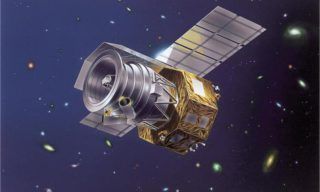
Roscosmos and JAXA representatives started working on Russian and Japanese space telescopes projects uniting. Both telescopes are designed to explore extragalactic space rays. The devices…

full story