July 21, 2014

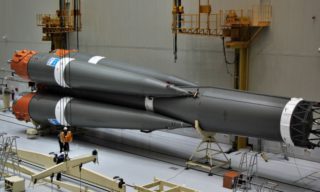
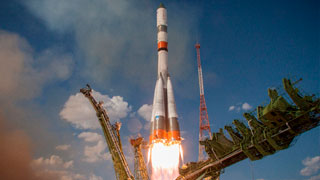
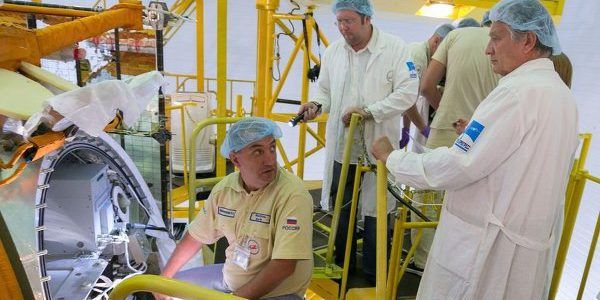
Russian biosatellite Foton-M with 5 geckoes, fruit flies, higher plants’ seeds and other biological materials onboard was launched with the help of Soyuz-2.1a booster from Baikonur spaceport, – Roscosmos spokesman reported.

The satellite was launched on July 19, at 00.50, Moscow time from 31 launchpad of Baikonur spaceport and separated from the booster at 00.58, Moscow time. Foron-M is expected to work on the orbit for about 2 months and after that its biocapsule with living organisms will return back to the Earth.

According to the Institute for Biomedical problems of Russian Academy of sciences most Foton-M scientific equipment of designed for experiments on living organisms.

“We will continue experiments on living organisms. This time we send to space 5 geckoes, fruit flights, microorganisms and higher plants’ seeds. Besides the experiments on gravitational physiology, exobiology, biological technology, radiation biology and radiation dosimetry”, – Institute for Biomedical Problems representative stated.

According to him it is not he first time we send geckoes to space but all the previous experiments lasted from two weeks to one month.  For example, 15 geckoes performed 30-days flight onboard Bion-M satellite last year. That time Bion- 1M descent capsule with mice, geckoes, fish, plants and artificial meteorites landed in Orenburg region, but most animals didn’t survive.
More from this category:
January 28, 2022

The Guiana Space Center (French Guiana) continues preparing the Soyuz-ST-B rocket with a Fregat-M upper stage to launch OneWeb spacecraft as part of mission number…

full story
March 3, 2019

The first in the history private manned spacecraft “Crew Dragon”, produced by the American company “SpaceX”, made docking with the International Space Station (ISS), the…

full story
July 16, 2014

World’s first joint space project uniting different countries started 39 years ago. The ground for Soyuz-Apollo experimental project was laid on 26-27 October, 1970, when…

full story
September 22, 2021

September 19 saw the first preflight training session of the Soyuz MS-19 crewed spacecraft prime and backup crews under the program of the 66th long-term…

full story
January 15, 2019

On January 14, 2019, Russian remote sensing satellites “Kanopus-B” №5 and №6, launched into orbit on the eve of the new 2019 year, transferred the…

full story
June 26, 2024

25 June 2024 marks half a century since the launch of the Salyut-3 (Almaz-2) station, designed at the Central Design Bureau of Mechanical Engineering (CDBM)…

full story
June 8, 2015

Russian Soyuz-2.1a booster with satellite for Russian Ministry of Defence needs was launched from Plesetsk spaceport in Arkhangelsk region, – Ministry of Defense representative on…

full story
February 7, 2022

At the Baikonur Cosmodrome, the specialists of the Yuzhny Space Center (branch of the Center for Operation of Ground-Based Space Infrastructure Facilities) and the Progress…

full story