
November 3, 2020

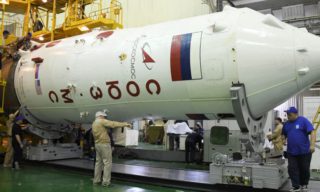
Roscosmos approved the first completely Russian ISS crew to go to the ISS aboard Soyuz MS-18 spacecraft in April 20201.

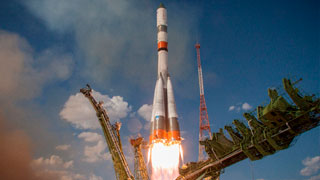
Cosmonauts selection commission approved the prime and back-up crews of ISS-65 mission. The launch is planned for April 2021 and will take place from Baikonur launchsite, – Roscosmos press office reports.

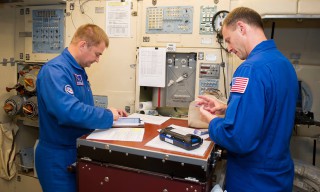
The prime crew comprises Oleg Novitskym Piotr Dubrov and Sergey Korsakov, the back up crew is made up of Anton Shkaplerov, Andrei Babkin and Dmitry Petelin.

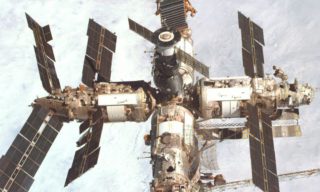
The previous completely Russian crew went to Mir space ctation in April 2000 and comprised Sergey Zalyotin and Alexandr Kaleri. No completely Russian crews have been launched to ISS so far.

More from this category:
July 3, 2014

Soyuz-2.1b booster with Fregat upper stage, Meteor-M #2 space device and 6 small satellites launch from Baikonur is scheduled for July 8, 19.58, Moscow time. The…

full story
September 10, 2013

On Monday the act on Russian ISS segment shift handover was signed and the ceremony of delegation of authority took place, – Mission Control Center…

full story
February 20, 2017

On February 20, 1986, 31 years ago the first module of Mir space station was orbited by Proton booster. It was a breakthrough for Soviet…

full story
June 24, 2019

The work of the 59th long expedition is being completed at the International Space Station (ISS). The crew members of the “Soyuz MS-11” spacecraft –…

full story
November 10, 2015

The Americans suggested Russia increasing the quantity of one-year ISS missions so that 12 missions have accomplished experiments to prepare for long-distance spaceflights by 2024,…

full story
November 21, 2013

“Dnepr” booster designed on the basis of RS-20 “Voyevoda” intercontinental ballistic missile (SS-18 “Satan” according to NASA classification) set several foreign space devices of different…

full story
November 27, 2013

Roscosmos informed NASA that MLM will not become a part of the ISS in 2014, – the head of Roscosmos Manned Space flight programs Alexey…

full story
May 13, 2019

The GLONASS national navigation satellite system will receive five new satellites in 2019. This is stated in the GLONASS Development Strategy until 2030, reports TASS…

full story