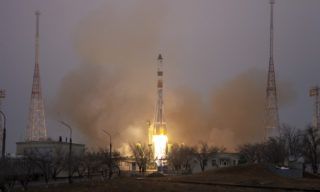
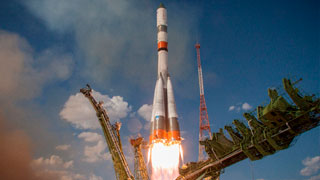

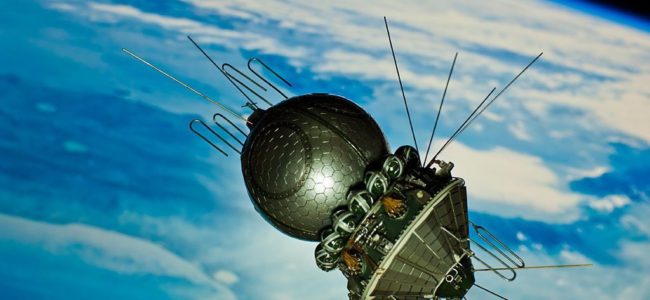
60 years ago, on May 15, 1960, a three-stage “Vostok” launch vehicle with an experimental prototype of the “Vostok” spacecraft was launched from the Baikonur Cosmodrome for flight tests under the program of the first human space flight.
The creation of a manned spacecraft began at OKB-1 (today – the RSC “Energia”, part of the Roscosmos State Corporation) by Government Decree of May 22, 1959.
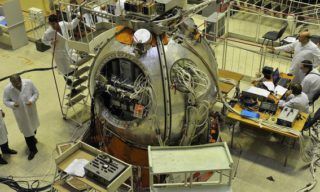
A year later, the OKB-1 project team, led by Chief Designer Sergey Korolev, completed the development of the main systems and assemblies of the new device, and Experimental Plant № 88 (now the Experimental Engineering Plant of RSC Energia) produced the first product samples in cooperation with other enterprises in the rocket and space industry.
For the debut flight test, the technological version of the unmanned ship was used, which was not equipped with a life support system, landing facilities, and thermal protection of the descent vehicle.
After a successful launch, the ship completed a four-day cycle to verify the functioning of the on-board systems and the reliability of the structure.
A few days later, on May 19, 1960, by the command of the Earth, a brake propulsion system was turned on to bring the spacecraft into dense layers of the atmosphere with the subsequent separation of the compartments.
But due to the failure of the orientation system, “Vostok” ascended to a higher orbit instead of the calculated descent trajectory, thereby making the first orbital maneuver.
The compartments of the ship continued the flight for several more years and left their orbits as a result of natural braking at the boundary of the Earth’s atmosphere.
The program of experimental testing of automatic spacecraft-satellites made it possible on April 12, 1961, to complete the first ever human flight into space aboard the “Vostok” manned spacecraft, which opened an era of world manned space exploration.