August 20, 2015
Categories: ISS, MCC, Soyuz, Space

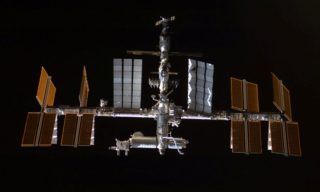
Operations on Soyuz TMA-16M manned spacecraft redocking from Poisk small research module to Zvezda service module of Russian ISS segment are scheduled for August 28 and will be accomplished in the manual mode, – Mission Control Centre reports.
“The aim is to release docking node of Poisk small research module to receive Soyuz TMA-18M spacecraft with ISS-45 mission crew onboard to be launched on September 2”.
According to the specialists’ calculations ISS crew will be redocking Soyuz TMA-16M in manual mode in the period from 10.09 to 10.34, Moscow time.
More from this category:
March 26, 2021

A successful launch of 36 OneWeb satellites aboard the Soyuz-2.1b launch vehicle with the Fregat upper stage was executed on Thursday from the Vostochny Cosmodrome….

full story
October 17, 2014

On October 16 Gagarin Cosmonaut Training Centre saw General Medical Board meeting that analyzed the data gained in the result of Russian ISS-42/43 mission crew…

full story
December 27, 2018

Today, on December 27, 2018, at 5:07 (Mosacow time) from the launch complex of the “Vostochny” cosmodrome was performed the launch of the rocket “Soyuz-2.1…

full story
February 16, 2014

Proton-M heavy booster with Turkish TurkSat-4A communication satellite was launched from Baikonur Spaceport, Roscosmos representative reported. Space device separated from Briz-M upper stage at 10.22…

full story
November 7, 2018

On November 7, 2018, at 03:47 Moscow time, the launch vehicle “Soyuz-ST-B” with the European meteorological spacecraft “MetOp-С” was launched from the cosmodrome of the…

full story
June 8, 2015

Launch schedule of Proton boosters will be announced next week, – Khrunichev Centre head Andrei Kalinovsky said the journalists on Monday. The schedule may be…

full story
January 16, 2014

Earlie MCC representative reported that medium altitude of the ISS was to be increased by about 2 km on January 16 . ISS reboost maneuver…

full story
August 26, 2020

One of the Russian geostationary meteorological satellites, Electro-L, is located over the Atlantic Ocean, Roskosmos reported. The geostationary orbit is a circular orbit with an…

full story