
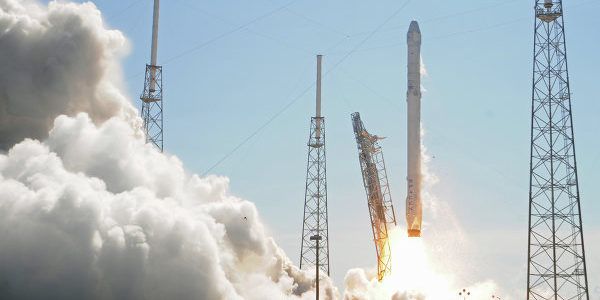
American booster Falcon 9 produced by SpaceX Company failed to reacth the International Space Station exploding 2 minutes 19 seconds after the lift-off and that was a serious blow for NASA, – Breitbart news website reports.
“It is still unclear how long will SpaceX rocket accident cause investigation take but until it is finished no space device of this company can be used in the framework of ISS maintenance”.
The media also points out that after SpaceX failure Russian Soyuz TMA-17M manned spacecraft practically remains the major means of cargo delivery to the ISS despite all political sanctions imposed against Russia by the West.
The website also reminds of April Progress cargo vehicle accident when the vehicle was not inserted into the target orbit with all communication with it lost. It happened in the result off-nominal 3rd stage separation because of fuel tanks depressurization.
Due to this accident Roscosmos shifted next Progress launch from August 6 to July 3 planning to use previous version of most reliable Soyuz-U booster.
Now NASA will have to buy a seat onboard Russian vehicles, – Cnadian The Globe and Mail writes.
The next Falcon-Dragon cluster can be launched not earlier that December 2017.
Falcon 9 was one-use American booster of Falcon series developed by Space X private company. It was supposed that the booster can be used to deliver to the space both cargoes and people. According to the contract with NASA Space X committed to accomplish 12 launches to the ISS. In September 2014 along with Boeing the company won the contract for manned flights to the ISS valued at about 6,8 billion dollars.
Falcon 9 booster can be used for Dragon commercial manned spacecraft launch as well as its cargo analogue to deliver cargoes to the ISS. These vehicles were also developed by SpaceX.