January 26, 2022
Categories: Roscosmos, Satellites

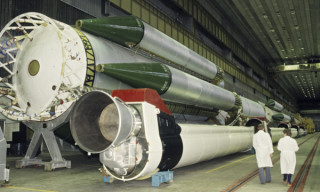
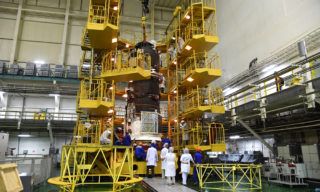
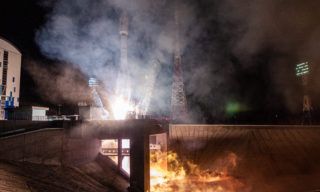
The Japanese company Axelspace Corporation has signed a contract with GK Launch Services (a subsidiary of Glavkosmos, part of the Roscosmos State Space Corporation) for the launch of four GRUS satellites. The spacecraft will be launched on the Russian Soyuz-2 launch vehicle from the Baikonur Cosmodrome in 2022.

The satellites will complement the existing AxelGlobe constellation, which currently consists of 5 satellites in orbit.

GRUS satellites are smaller than conventional Earth observation satellites, but capable of taking high-quality images with a resolution of 2.5 meters. The service initially started with a single satellite in May 2019, and from June 2021, five satellites started taking images, which encouraged the growth in the number of the service customers and the demand for the satellite data in various industries across the world.

More from this category:
April 4, 2019

Today, on April 4, at 14:01 (Moscow time), the launch vehicle “Soyuz-2.1a” with the “Progress MS-11″cargo spacecraft successfully launched from site № 31 of the…

full story
March 28, 2022

Pre-launch processing of the cargo transportation spacecraft (CTS) Progress MS-20 has started in the processing facility of Site 254 at the Baikonur launch site to…

full story
July 8, 2015

On July 8, 2015, in GCTC Interdepartmental Commission approved next ISS crew to go to the station onboard Soyuz TMA-17M spacecraft. The main crew comprises…

full story
August 25, 2021

The Express-AM5 satellite operated by the Russian Satellite Communications Company (RSCC) is used in restoring communications and the Internet in the regions of Yakutia affected…

full story
December 4, 2018

The crew members of the “Soyuz MS-11” spacecraft on December 3, 2018 at 22:38 Moscow time, went on board the International Space Station (ISS). Members…

full story
July 2, 2020

NASA astronauts Chris Cassidy and Robert Behnken stepped out into the space to replace ageing batteries on the International Space Station on July 1. This…

full story
June 13, 2013

The life of human in space is very much different from life on the Earth’s surface. The greatest difference is of course the weightlessness effect….

full story
June 1, 2015

Steering engine of Proton-M 3rd stage failed because of excessive vibration loads, – Roscosmos Head Igor Komarov reported. The reason of Proton-M off-nominal flight was…

full story