February 26, 2014
Categories: ISS, JAXA, Roscosmos, Science

Roscosmos and JAXA representatives started working on Russian and Japanese space telescopes projects uniting.

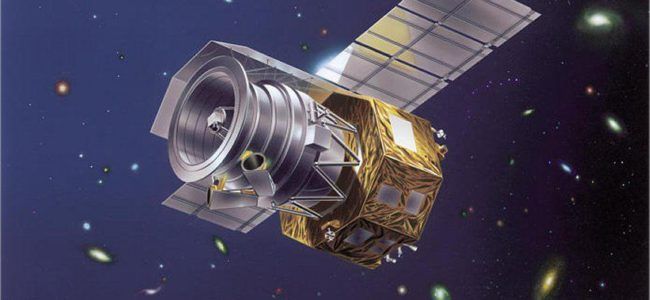
Both telescopes are designed to explore extragalactic space rays. The devices supposed to be installed on the ISS have to record glowing tracks formed by high-energy particles entering the atmosphere. The main object to be explored will be ultimate energy particles (that is the particles with GZK limit energy).

The key difference between the two telescopes is that JEM-EUSO will use lenses for focusing while the Russian one form the picture with the help of a mirror. The joint project will combine these approaches with Japanese party represented by RIKEN Institute developing optical devices and image sensors at that and Russian party creating the mirror and other parts of the telescope.

According to the senior scientist of Institute of Nuclear Physics of Lomonosov Moscow State University Pavel Klimov the details of the program how to unite two independent projects are being developed at the present time by joint working group. The most conservative variant of program implementation stipulates for full-size mirror being the main part of the telescope while the lens increasing the viewing angle from 7 to 14 degrees will be installed between the mirror and photon detector. The other variant suggests dividing the device into three separate telescopes thus increasing the view.

The dates of device launch to the ISS are not stated yet and the final plan of the project is not confirmed either.
More from this category:
June 23, 2015

Japanese businessman Satoshi Takamatsu who has been passing preflight trainings in Star City is not going to fly to the ISS in September instead Sarah…

full story
April 30, 2015

At 10:09:50, Moscow time, April 28, 2015, Progress M-27M cargo vehicle was launched by Soyuz-2.1a booster from Baikonur spaceport. The launch and the flight were…

full story
January 23, 2014

Progress-MS modernized cargo vehicles will fly to the ISS since 2015. The improvements and introduced gradually and already being practiced on Progress-M, – RSC Energia…

full story
February 12, 2019

The management of the GCTC, under the leadership of the head of the Center Pavel Vlasov, met with the delegation of the Moscow Aviation Institute…

full story
December 2, 2019

On November 29, 2019, at 13:25 (Moscow time), the “Progress MS-12” cargo spaceship, under the control of the Mission Control Center, undocked from the Russian…

full story
February 4, 2015

New Russian space observatory Millimetron is to be sent to the orbit in 2025. This unit will help gathering information on Universe processes, learn what…

full story
August 20, 2020

The ISS-64 crew is preparing for a flight according to the two-turn scheme of the spacecraft rendezvous with the station According to the two-turn rendezvous…

full story
November 27, 2014

The launch of European Astra-2G telecommunication satellite scheduled for November 28 was indefinitely postponed. Proton-M booster already installed on the launchpad will be transported back…

full story