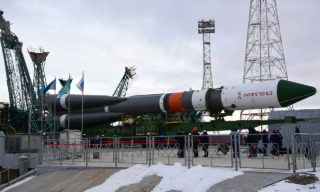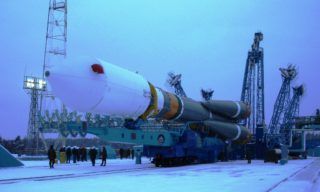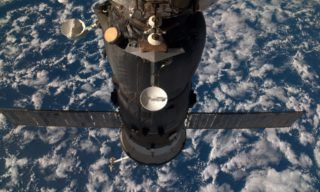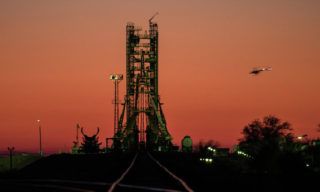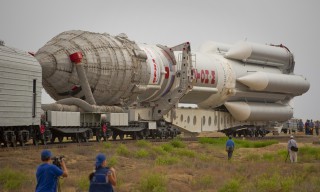
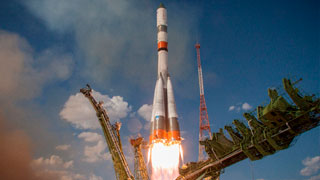


Russia successfully started its 2014 space flight program. Progress M-22M cargo vehicle launched from Baikonur spaceport on February 5, 20.23 Moscow time, successfully docked with the ISS on February 6, 02.22 Moscow time. The vehicle docked with Pirs docking compartment of Russian ISS segment in automatic mode; the crew didn’t have to interfere with Kurs docking system operation.
Progress M-22M delivered more than 2,5 tons of cargoes to the ISS, among them was goldfish container for Aquarium-AQH experiment, – Roscosmos representative reported.
Aquarium-AQH experiment is planned to be conducted in the American ISS segment, in Japanese Kibo module in JAXA Aquatic Habitat (AQH) aquarium. Among other biological objects sent to the station are wigglers and flat earthworms”, – the spokesman noted.
Russian-Japanese Aquarium-AQH experiment is aimed at the exploration of space flight impact on closed ecological system and its elements (plants, animals, fish) sustainability under microgravity conditions.
Besides the scientists hope to get new data on long-term storage opportunity of entomostracans eggs and its ability to reactivate after exhibiting under space flight conditions.
According to the specialists the information received in the result of experiment is of great importance both for fundamental science and for works on space crews life-support systems development on the basis of biological matter cycle.
Progress M-22M delivered to the ISS fuel for orbit maintenance, equipment to station’s upgrade, foodstuffs, water, air for and parcels for the cosmonauts and packs with scientific equipment for experiments. Moreover it also brought to the ISS “Tchasky” microsatellite designed by the students of South-Western State university of Kursk in cooperation with Peru specialists. The satellite will be set into the orbit in spring 2014, the cosmonauts will launch it manually during the spacewalk. This microsatellite will broadcast children’s appeal to the extraterrestrial intelligence.
Among all cargos there are about 500 kg for the American ISS segment, these are American, European and Japanese cargoes delivered under commercial contract.