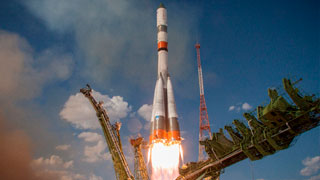


Russian Satellite Communications Company plans to launch satellites by Proton boosters only up to 2020, – Company’s Director General Yuri Prokhorov said.
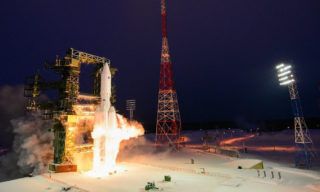
He also pointed out that Proton boosters and Briz-M upper stage proved to be the most reliable launch vehicles. Besides both the booster and the upper stage are manufactured in Russia and this fact is also of great importance.
RSCC Deputy Director Alexander Ganin added that in the nearest future all Proton boosters will launch two satellites at once.
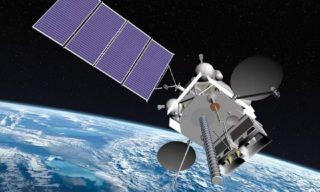
“We plan to launch all our satellites by Proton. Express-80 and Express-103 will be launched by one booster. Express-AMU4 will go to space with another satellite but this issue is being discussed at the moment. Thus we are going to minimize the costs”, – Ganin stated.
RSCC is a Russian State Satellite Communication operator providing global coverage. RSCC belongs to the ten largest world satellite operators in terms of satellites and orbital slots and has more than 45 years of experience. RSCC provides a full range of communications and broadcasting services via its own satellite fleet of 13 satellites and terrestrial infrastructure: video distribution and contributions, DTH services, satellite news gathering, presidential and government applications, broadband access and Internet, IP trunking and cellular backhaul, mobility solutions for vessels and other. The company deploys regional TV satellite distribution networks as well as multi-functional corporate and government VSAT networks. Besides, RSCC provides satellite telemetry, tracking and control services to other operators. Today RSCC is present at all geographically available markets, providing services for customers from 52 countries worldwide.
The company possesses the largest satellite constellation in Russia located in the geostationary orbital arc from 14 West to 145 East and cover the whole territory of Russia, the CIS, Europe, the Middle East, Africa, the Asia Pacific region, North and South America, and Australia. RSCC includes five teleports – Satellite Communications Centers (SCC): Dubna, Bear Lakes, Skolkovo, Zheleznogorsk, Khabarovsk and the Shabolovka Technical Center in Moscow as well as its own high-speed optical-fiber digital network.