

Soviet space shuttle Buran was ahead of his time and in most criteria left American “space-shuttle” system, behind, – as stated in analytic report by All-Russian Research Institute of Aviation Materials devoted to 25th anniversary of Buran launch.
Our Buran could stay on the orbit twice as long as American shuttle: 30 days instead of 15, it could take onboard 30 tons of cargo (while shuttles could take only 24 tons) and 10 crew members (7 crew members in case of shuttles). Launch preparation took 15 days only while about a month of prelaunch operations was needed to prepare shuttle for the launch from Cape Canaveral. But the main difference between Soviet Buran and American shuttles was his ability to fly and land in automatic mode that was brilliantly proved on November 15, 1988.
Besides “space-shuttle” complex consisting of fuel tank and two solid propellant boosters could not be used for orbiting any other space devices besides shuttles, which also could not approach the runway several times as their engines were supposed to be off at the moment of landing.
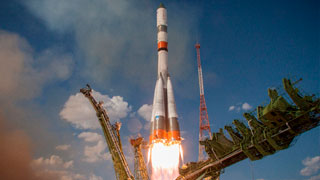
In its turn Soviet scheme using super-heavy “Energia” booster was made universal. It enabled to orbit any spacecrafts or cargoes with the weight up to 100 tons, “Buran” shuttle could use its engines while descending and landing in automatic mode.
Our space shuttle was optimized for 100 flights, solid propellant booster – for 20, main thrusters – for 66 flights. The only one-use part of Soviet system was external fuel tank. After first “Buran” flight only 8 of all 38800 unique heat-protection tiles were lost. After the first American shuttle flight more than 100 heat-protection elements of 24192 tiles and 3254 flexible coating mates had to be replaced.
“Energia-Buran” project developed by USSR as a response to American space-shuttle system joined 1200 industry enterprises together. To design the spacecraft 39 brand new materials and 230 revolutionary technologies were developed only by Research Institute alone. The program lasted for 18 years, 16,5 million Soviet rubles were spent on it.