

According to information from RIA NOVOSTI (ITAR-TASS) – The Space Corporation “Energia”, after a state of emergency with an air leak at the International Space Station (ISS), will check for the presence of traces of the drill all the spacecrafts “ Soyuz” and “Progress”, that are in storage at the Baikonur Cosmodrome and the” Soyuz” and “Progress” spacecrafts, that are in storage near Moscow.
RIA NOVOSTI received this information from a source in the rocket and space industry.
According to the source, the investigation will be carried out as part of an investigation into the causes of the emergency on the ISS-docked spacecraft “Soyuz MS-09.”
This decision, the source of the agency added, received an internal commission of the RSC ”Energia”, which was held on September 3.
A ship inspection at the RSC “Energia” company, in Korolev city will begin in the next few days, the inspection at Baikonur will start next week.
Currently, there are three ships on Baikonur, intended for launch to the ISS.
This was “Soyuz MS-11”, “Soyuz MS-10”, delivered last week for the manned launch in December and cargo “Progress MS-10”, which will be launched in October.
At the same time, the RSC “Energia” continues assembly of the ships, which will be launched in 2019.
In mid-September, the production of the “Progress-MS-11” cargo vehicle should be completed, which will be the first of the Russian vehicles to be launched to the ISS in 2019 – its launch is scheduled for February 7, 2019.
In total, at the various stages of readiness there are more than a dozen devices, since the production time of each takes up to 2.5 years.
The air leak on the ISS was found on the night of Thursday, 30 August.
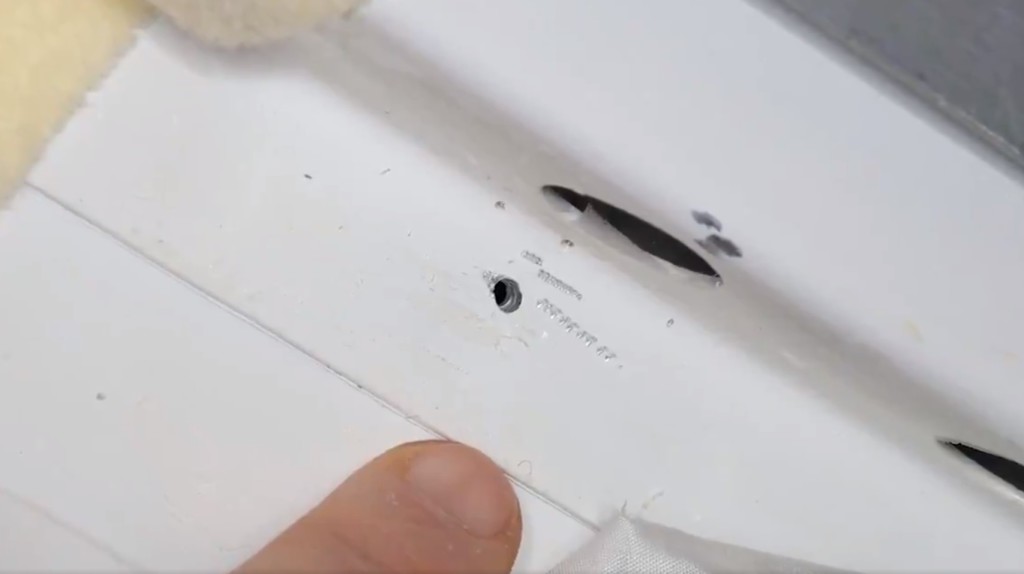
The crew found a “micro crack” in the living compartment of the “Soyuz MS-09”.
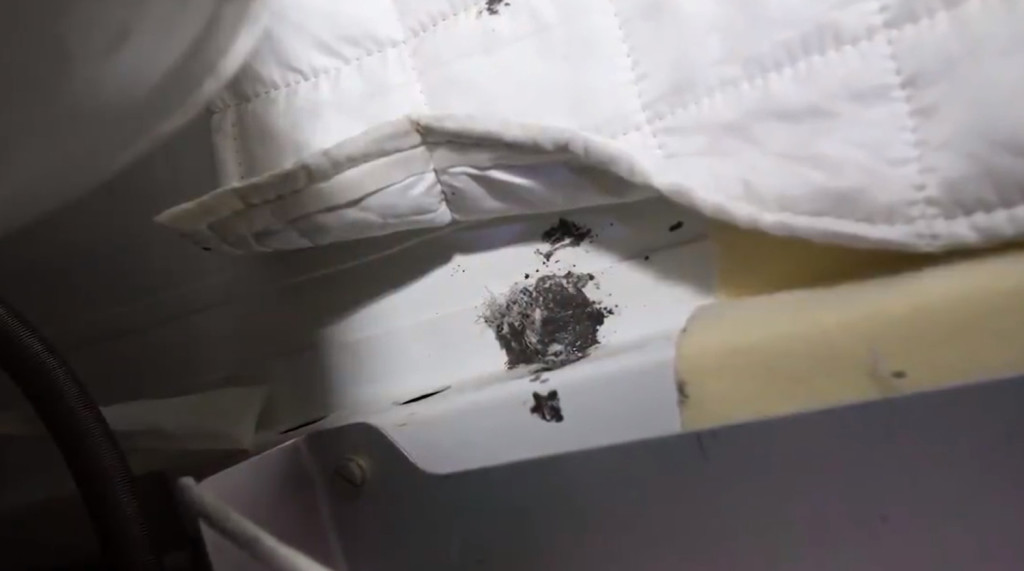
The source of “RIA NOVOSTI” in the rocket and space industry reported, that the leakage of air in a ship docked to the ISS was caused by a hole from the drill, which was covered with glue (see photos below).
Previously, the cosmonauts reported to the Earth, that in the location of the microcrack they found unmarked traces of glue.
Another agency source said, that the employee, who performed a defect, closed the hole with a special glue, that was not found during the tests before the launch.
However, later, already in orbit, the glue dried out and protruded, opening the hole.
Subsequently, the version of the production defect was confirmed by the head of “Roskosmos” Dmitry Rogozin.
According to him, it could have appeared both on Earth and because of sabotage in orbit.
On Monday, RSC ”Energia” began an internal investigation concerning the fact of negligence in the production of the “Soyuz MS-09”.
A hole from the drill, which was covered with glue in the living compartment of “Soyuz MS-09” spaceship