
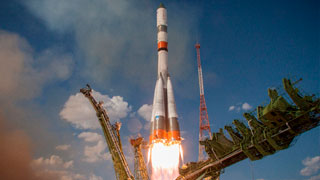


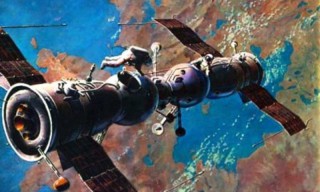
On February 20, 1986, 31 years ago the first module of Mir space station was orbited by Proton booster. It was a breakthrough for Soviet manned cosmonautics and orbital program and a milestone for world space exploration.
The station had been operating for 15 years instead of 5 years initially planned and was a home for cosmonauts and astronauts from 12 countries. 104 cosmonauts and astronauts visited Mir though initially it was designed as a soviet national project. For the years of its operation 25 international manned programs had been successfully completed. The first foreign astronaut working onboard Mir was from Syria, as for the US there were even more Americans who had visited the station than Russians.
Orbital complex consisted of 6 modules, the total mass of the station amounted to 140 tons. More than 11 tons of scientific equipment were deployed aboard Mir and more than 23 thousand experiments and studies conducted. For station maintenance and upgrade the cosmonauts performed 78 spacewalks.
“For me Mir orbital station was the first and most complex object I controlled from Mission Control centre. It has been always associated with an enormous extraterrestrial home not only for those crews working onboard but either for the whole mankind. For me personally at that time it was an inconceivable creation of a human genius, a dream I’ve been always aspired to”, – Hero of the Russian Federation, pilot cosmonaut Andrei Borisenko who is currently working onboard the ISS says.
In the course of Mir space project implementation our country gained unique scientific and technical experience in the field of long-duration spaceflights.





Latest news:

Jul 2, 2025