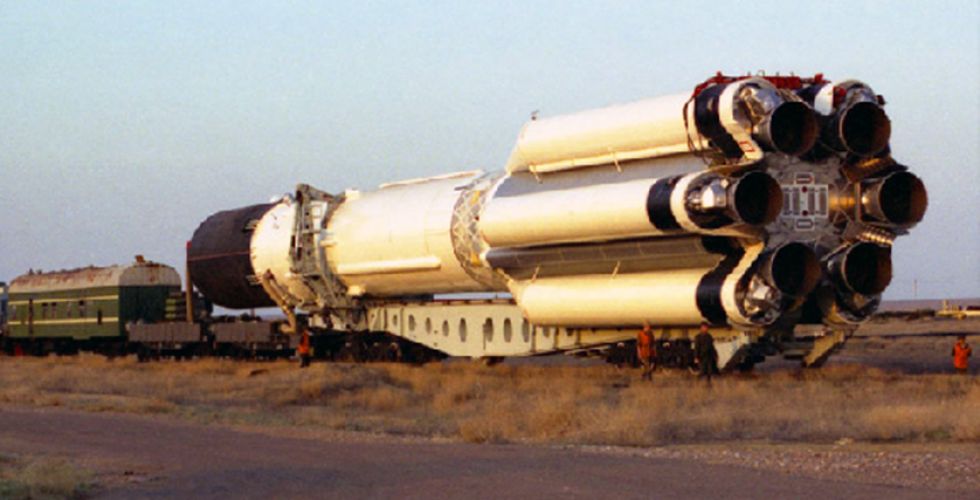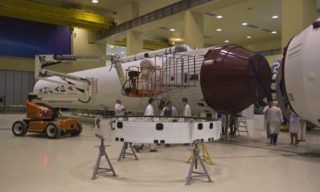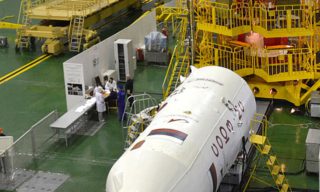

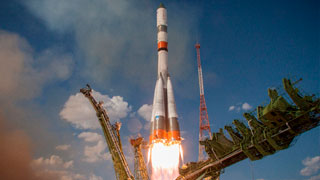


25 years ago, on May 20, 1995, the “Proton-K” launch vehicle with the “Spectrum” research module was launched from the Baikonur Cosmodrome under the construction program for the world’s first multimodular manned orbital complex “Mir”.
After a 12-day autonomous flight, on June 1, 1995, the module automatically approached the docking unit of the base station of the “Mir” station.
Then, “Spectrum” using a remotely controlled manipulator was re-docked to the side unit of the base unit and became part of the orbital complex.
During this period, the international crew of the 18th main expedition, consisting of cosmonauts Vladimir Dezhurov, Gennady Strekalov and astronaut Norman Tagard, worked at the station during this period.
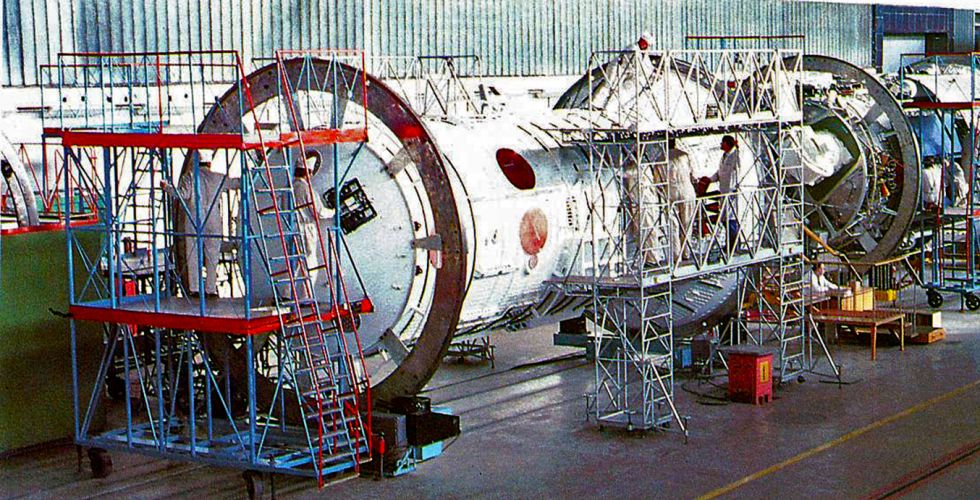
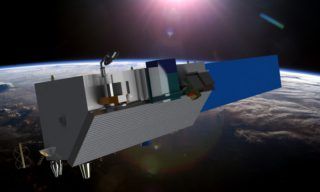
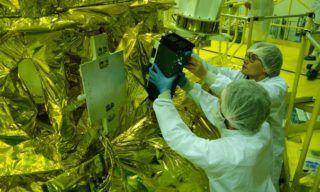
The “Spectrum” module (index 77KSO) was developed with the leading role of NPO “Energia” based on the functional cargo compartment of the cargo vehicle.
The scientific equipment of the “Spectrum” was designed to observe the Earth and search for natural resources, study the upper atmosphere, near-Earth space and the influence of the space environment on various materials.
For the first time, on “Spectrum”, by agreement with NASA, American equipment was also installed for biomedical experiments to study the conditions of a person’s prolonged stay in space.
The use of this experience was supposed to create the future International Space Station.
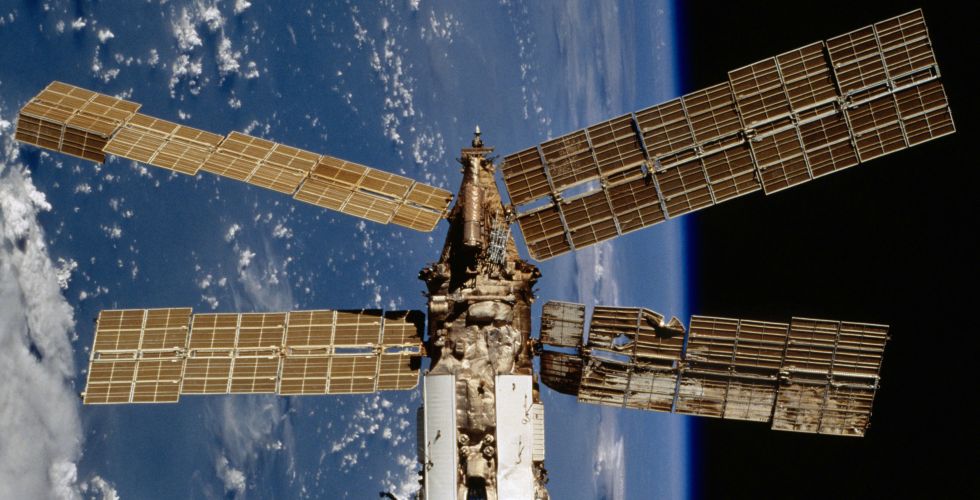
The module also featured a unique system of high-power solar panels, which became an important source of power for the entire orbital complex.
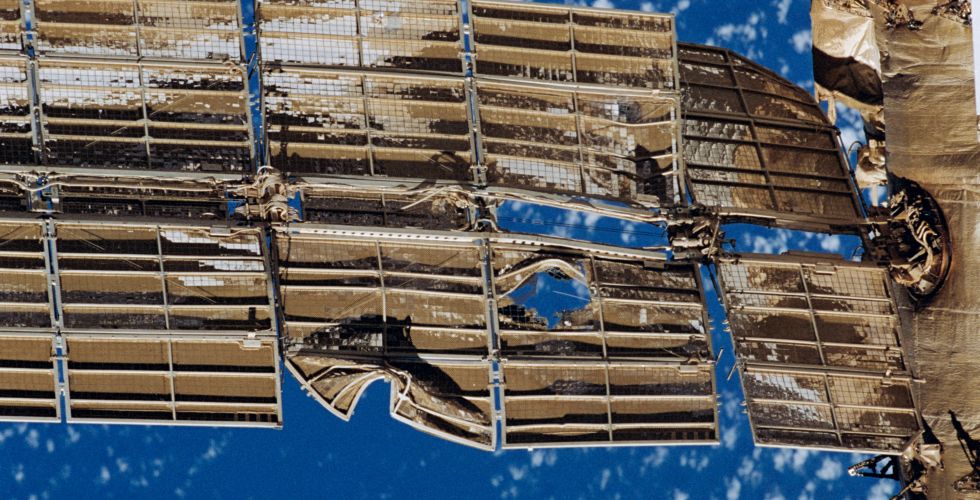
The successful operation of the “Spectrum” in low Earth orbit continued until June 1997, when it was damaged as a result of a collision with the “Progress M-34” cargo ship during the development of the teleoperator control mode during the experiment with its repeated approach and docking.
Further repair measures as a result made it possible to restore the electric communication lines, but the depressurized module never returned to the normal flight mode.
It remained uninhabited as part of the “Mir” orbital complex for the entire remaining life, providing power to the station until its disposal on March 23, 2001.