October 29, 2014
Categories: NASA, USA

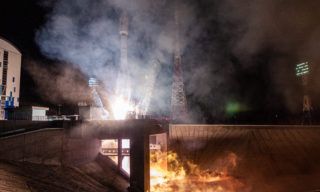
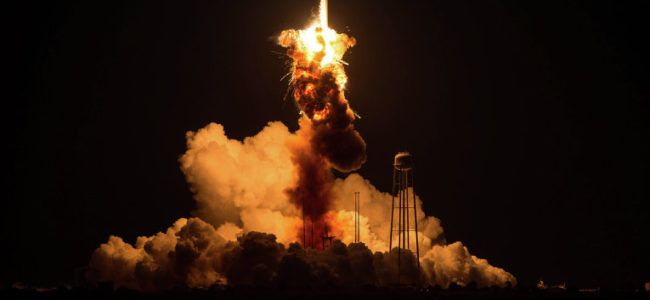
Cygnus cargo vehicle that was to more than 2 tons of cargoes to the ISS burst at the lift-off at Wallops spaceport in USA.

The launch was to take place with the help of Antares booster from Wallops Flight Facility in Virginia (situated on the coast of the Atlantic Ocean) at 01.22, Moscow time. The rocket busrt approximately 6 seconds after the lift-off.

NASA Mission Control Centre confirms the loss of the space vehicle.

According to the data there were no casualties.

According to NASA the loss of the space vehicle won’t affect the ISS crew since they are provided with everything necessary up to March 2015.

Initially Cygnus launch was planned for Monday but was put off because of the unknown vessel detected the that region of the ocean the space vehicle was to fly above.

The vehicle was to deliver to the ISS 2,290 tons of cargoes, including foodstuffs for the crew and scientific equipment. The docking with the ISS was planned for November 2.

The first stage of Antares booster the burst at the lift-off was designed by Ukrainian design bureau “Yuzhnoye”.

Special Commission was gathered to investigate the causes of the accident.

More from this category:
September 13, 2013

Russian cosmonaut Pavel Vinogradov who celebrated his 60th Birthday onboard the ISS is ready to go to space again. “I like flying to space and…

full story
August 30, 2019

At the GCTC began the examination complex training of the main and backup crews of the ISS-61/62 / EP-19. The backup crew, consisting of cosmonaut…

full story
December 1, 2015

Russian state operator Satellite Communications Company put Express-AM8 into operation. “Upon completion of orbital testing Russian telecommunication satellite Express-AM8 was put into operation on December…

full story
February 22, 2017

The first after December accident Progress cargo vehicle was successfully launched from Baikonur spaceport, – Mission Control Centre representative reported. Progress MS-05 will deliver to…

full story
March 24, 2014

A Russian Soyuz rocket launched a Glonass navigation satellite into orbit early Monday morning from northwestern Russia, a spokesperson for the country’s aerospace defense forces…

full story
November 27, 2014

The postponement of Proton-M booster launch with European Astra-2G space device won’t affect the launch of Proton-M with Yamal-401 telecommunication satellite planned for December 26….

full story
July 15, 2014

The first launch of Angara heavy booster with a satellite will take place in 2016-2017, Roscosmos head deputy Alexander Ivanov reported. “First Angara boosters for…

full story
January 10, 2022

We are glad to announce first zero-g flight dates for the next year: April 14 and April 28. Group admission is on! Zero-g flight aboard…

full story