
October 26, 2020

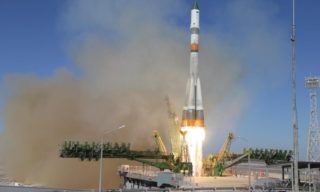
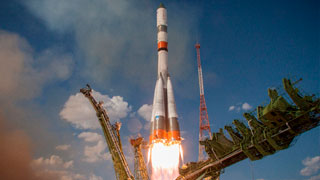
The third  Glonass-K new generation navigational satellite launched on Sunday from Plesetsk launchsite with the help of Soyuz-2.1b booster was successfully inserted into the estimated orbit.

Soyuz was launched on October 25 at 22.08, Moscow time, at 22.11 ground-based Aerospace Forces operation crews took over the control of the flight. At 22.19 Fregat upper stage with the satellite separated from the third stage of the booster.

It was the 12th space launch Russia has performed in 2020 and the fifth one – performed from Plesetsk launchsite.

The first Glonass-k satellite was inserted into the orbit in 2011 and passed the flight tests, the second one was launched in December 2014 and was put into operation in February 2016.

According to Reshetnev Informational Satellite Systems Company the third Glonass-K satellite was developed taking into consideration the results of flight tests of the two satellites launched and has more components produced in Russia. Initially the launch was planned for March but several times rescheduled.

New generation satellites Glonass-K and Glonass-K2 differ from Glonass-M by increased quantity of navigational signals beamed.

Besides Glonass-K is equipped with COSPAR-SARSAT search and rescue international system.

Currently Russian GLONASS system comprises twenty eight satellites: twenty five Glonass-M and three Glonass-K. Twenty four of them are in operation, one is being tested, one under maintenance one in reserve and one is being put into operation. Twenty four satellites are needed to cover the Earth surface.

More from this category:
September 30, 2014

The first launch of Angara heavy booster will take place no sooner than December 25, Roscosmos representative reported. The spokesman specified that the date of…

full story
June 8, 2015

Launch schedule of Proton boosters will be announced next week, – Khrunichev Centre head Andrei Kalinovsky said the journalists on Monday. The schedule may be…

full story
February 7, 2014

Main and back-up ISS-39/40 crews started their examinations that will last till late February. Early March cosmonauts and astronauts will start complex examination trainings that…

full story
July 19, 2021

The support Russian government gives to negotiations regarding delivery of Russian rocket engines to US will enable to maintain mutually beneficial cooperation, – Roscosmos reports….

full story
May 20, 2015

It is too early to replace proton with Angara since this is a new rocket and it didn’t have enough time to accumulate positive flight…

full story
January 10, 2014

RIA Novosti – Kazakhstan wants a permanent Russian presence at the Baikonur space center, the head of its space program said on Thursday, after years…

full story
February 13, 2014

Russian Spektr-R space device (“Radioastrion”) was registered in Guinness book of World records as the largest space radiotelescope, – Lebedev Physical Institute Astro Space Centre…

full story
April 29, 2014

Russian Luch-5V and Kazakh KazSat-3 satellites orbited on Monday operate nominally, JSC Reshetnev Information Satellite Systems representative reports. Proton-M booster with Luch-5V and Kazsat-3 satellites…

full story