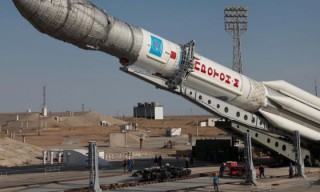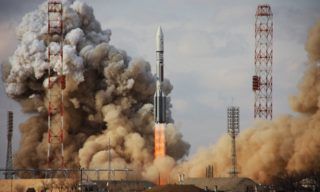
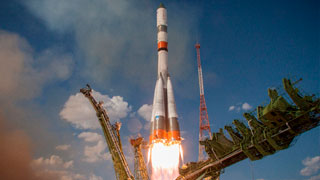


Russia has conducted 125 accident-free rocket launches over the past five years, which is the best indicator in the world. This was announced by Yuri Borisov, Director General of Roscosmos, at the plenary session of the State Duma.
“I would also like to talk about some significant results of the industry’s activity. In particular, accident-free launches of domestic space rockets over the past five years have been ensured, which is the world’s best indicator of the reliability of the means of introduction – 125 accident-free launches,” he said, pointing out that other countries had 44 accidents over the same period.
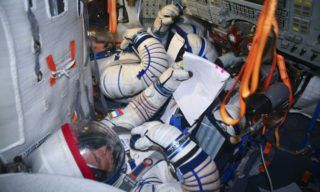
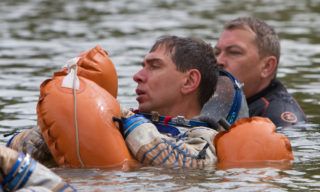
A series of accident-free launches of Russian space launch vehicles began after October 2018. Recall, then, in October 2018, the flight to the ISS of the Soyuz MS-10 spacecraft was interrupted due to an accident during the separation of the rocket stages. On its board were Russian cosmonaut Alexei Ovchinin and American astronaut Nick Hague. At an altitude of about 90 kilometres, the emergency rescue system worked flawlessly, and the descent vehicle with the crew landed safely. Five months later, Ovchinin and Hague flew into orbit on another spacecraft.
In 2021, Russia set its first record for the number of accident-free space launches. The launch of a Soyuz-2.1b rocket carrying 36 British OneWeb communications satellites from the Vostochny Cosmodrome on 28 May that year was the 59th consecutive accident-free Russian space launch. This has never happened before in modern Russian history.
The previous Russian record of 58 consecutive successful space launches was set between February 1992 and February 1993. Meanwhile, experts note that during the Soviet era, the country had a period – from January 1983 to November 1984 – when 185 consecutive space launches were conducted, as they call it, without a hitch. So, there is something to aspire to.