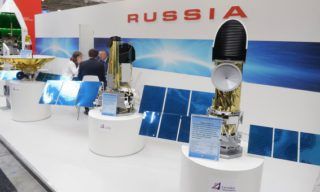




One of the Russian geostationary meteorological satellites, Electro-L, is located over the Atlantic Ocean, Roskosmos reported.
The geostationary orbit is a circular orbit with an altitude of 35,786 kilometers.
“On August 25 at 00:00 (Moscow time), the maneuver was completed to transfer the Russian satellite” Electro-L “No. 2 from the point of 76 degrees east longitude to the point 14.5 degrees west longitude. The transfer time was about 35 days. the apparatus is operating normally, “the statement on the state corporation’s website says.
Prior to this, Russia did not have geostationary meteorological satellites located over the Atlantic Ocean.
The first geostationary weather satellite, Electro, launched in 1994, worked over the Indian Ocean at 76.8 degrees east longitude.
The first Electro-L spacecraft, launched in 2011, operated over the Indian Ocean and failed in 2016 when it was transferred to a point of 14.5 degrees West longitude over the Atlantic Ocean.
The second Electro-L satellite, launched in 2015, worked over the Indian Ocean until the arrival of the third Electro-L satellite, launched in 2019, at 76 degrees East.
The main area of application of the “Electro” spacecraft is to provide Roshydromet, the services of the Russian Ministry of Defense and other interested departments with operational information for weather forecasting on a regional and global scale, analysis of aviation flight conditions, climate monitoring and emergency control, as well as relaying signals from emergency beacons COSPAS-SARSAT systems.