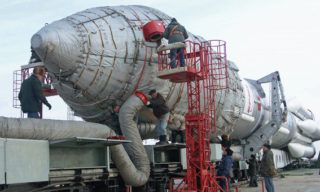
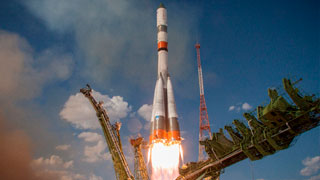


At the Baikonur Cosmodrome, Yuzhny Space Center specialists (a branch of the Center for Ground-Based Space Infrastructure Facilities Operation, part of Roscosmos) started fueling the Fregat upper stage intended to inject the Arktika-M spacecraft into low-Earth orbit. Prior to that, a technical management meeting took place, with the Center For Fuelling Complex Tests specialists reporting on the readiness of the necessary equipment.
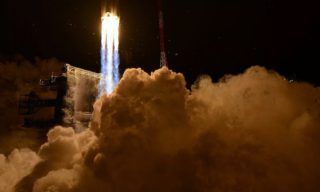
The joint crew assembly of Yuzhny Space Center, Barmin Research Institute and NPO Lavochkin specialists (all parts of Roscosmos) took place at Site No. 31. The filling of the upper stage with propellants and compressed gases is to be completed on January 24, 2021. The Soyuz-2.1b carrier rocket with the Fregat upper stage and the Arktika-M spacecraft is scheduled to launch in the end of February this year. The rocket is to lift off from the Site No. 31 launchpad at the Baikonur Cosmodrome.
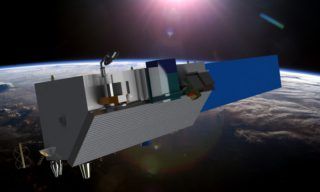
Satellite systems in highly elliptical orbits are necessary for information support in online meteorology, hydrology, agrometeorology, climate and environmental monitoring in the Arctic region. Arktika-M spacecraft will provide round-the-clock all-weather monitoring of the Earth’s surface and the seas of the Arctic Ocean, as well as constant and reliable communication, which will support dynamic socio-economic development of the northern regions of our country.
Taking into account the peculiarities of the operating orbit, Arktika-M spacecraft have increased radiation protection and bigger solar batteries. At the same time, continuous round-the-clock observation of the Arctic region from a Molniya-type highly elliptical orbit requires at least two spacecraft, alternately replacing each other in the working section of the orbit apogee. Therefore, the Arktika-M space system orbital group requires at least two spacecraft.