January 20, 2014

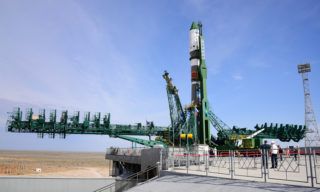
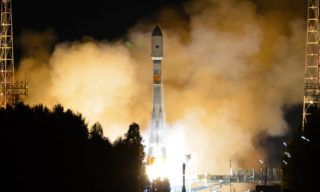
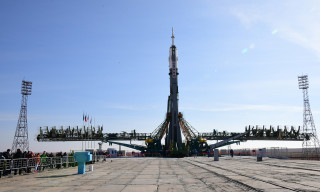
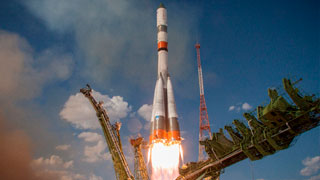
Once again Baikonur spaceport became a leader in terms of quantity of space launches performed since 23 boosters with space devices we launched from its launchpads in 2013, – Roscosmos reports.

Last year 11 Soyuz booster launches were performed form Baikonur spaceport: 4 launches with Soyuz-TMA manned spacecrafts and 4 Progress-M cargo vehicles ones in accordance with the ISS program and 3 launches according to Federal Space program and commercial launches.

Moreover Baikonur performed 10 Proton booster launches (one of them was crash), one Zenit booster and one Strela (RS-18, eng. “Arrow”) RS-18 conversion booster launches.

More from this category:
May 8, 2013

According to RIA Novosti, Russia’s Progress M-19M resupply spacecraft will readjust the orbit of the International Space Station (ISS) on Wednesday, a spokesman for the…

full story
July 24, 2018

On July 25, 1984 Svetlana Savitskaya became the first woman of the Earth, who made an exit into the open space. Outside the station Svetlana…

full story
June 24, 2014

The cosmonauts will be having water survival trainings on the basis of # 179 Ministry of Emergency Situations Centre (situated in Noginsk city, Moscow region)…

full story
April 19, 2019

This year is a year of remarkable space anniversaries. And the main one is 85 years since the birth of the first cosmonaut of the…

full story
May 27, 2019

On May 27 specialists of the Vostochny Space Center (TsENKI company branch) together with the Progress Space Center (part of Roscosmos State Corporation) started the…

full story
August 7, 2020

The unified state program of space activities of Russia for the period 2021-2030 will be submitted for approval by the government by the end of…

full story
November 15, 2013

Soviet space shuttle Buran was ahead of his time and in most criteria left American “space-shuttle” system, behind, – as stated in analytic report by…

full story
November 12, 2021

The International Space Station orbital altitude was increased by about 1.2 km on November 10, 2021, to avoid space debris. Previously, a planned ISS orbit…

full story