
Before proceeding with the examination of complex training in the GCTC, the crews pass a “test exam” for knowledge of the Russian segment of the International Space Station (ISS), which is called the “Typical flight days”.
This is a training, simulating the working day of the crew on the ISS RS with possible regular and abnormal situations.
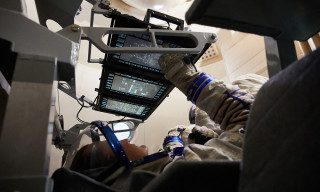
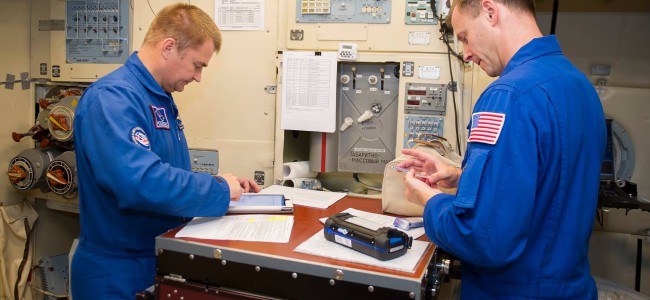
On September 6, Roskosmos cosmonaut Alexei Ovchinin and NASA astronaut Nick Hague worked out training on the simulator of the Russian segment of the International Space Station, and a week later they will have to pass comprehensive examinations at the Cosmonaut Training Center.
For Alexey Ovchinin the training began in the morning, and in the afternoon, his foreign colleague Nick Hague joined the ISS.
The Russian cosmonaut, in accordance with the “test exam” cyclogram, performed those typical operations, of which the standard crew day is on orbit.
The main tasks set by the instructors’ team were the replacement of the blocks in the power supply system, work with the equipment, medical research and household operations, as well as conducting a scientific experiment, which is planned by the future flight program.
Particular attention during the “Typical flight days” is given to the cosmonaut’s work with life support systems.
Most often on these systems non-standard situations are worked out.
This time the ISS-57/58 main crew encountered the problem of loss of communication with the Earth as a result of the failure of the VHF sensor, and also prevented a failure in the life support system.
At the end of the “working day” Alexey Ovchinin and Nick Hague worked out the actions to eliminate the emergency situation, introduced by the instructors – depressurization on the ISS, where they demonstrated not only excellent knowledge of the algorithm of actions in extreme conditions, but also harmonious work inside the crew, trust and mutual assistance.
At the end of the “typical day”, the training team of the GCTC, having analyzed the work of the ISS-57/58 main crew, noted the successful completion of the training program in accordance with the cyclogram.