September 2, 2013
Categories: ISS, Roscosmos, Russia, Science

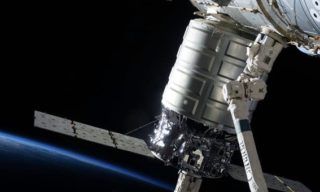
The exact date  of new multipurpose laboratory “Nauka”module  launch to the ISS is finaly announced.

“October this year according to RSC Energia plans the module will be sent to Baikonur spaceport. “Nauka” launch was scheduled for April 25, 2014, – the spokesman reported to ITAR-TASS.

He specified that “ at the moment all the documents needed for the program including launch schedule were sent to Federal Space Agency (Roscosmos) for approval”.

More from this category:
September 10, 2013

On Monday the act on Russian ISS segment shift handover was signed and the ceremony of delegation of authority took place, – Mission Control Center…

full story
August 27, 2014

ISS orbit was adjusted on August 27, at 12.37. The adjustment took place nominally. According to telemetry data ATV-5 cargo vehicle thrusters have been operating…

full story
September 4, 2013

Joint operations on assembling of Proton-M booster nose cone for Astra-2E telecommunication satellite launch started in 92-A50 integration building of Baikonur spaceport, – Khrunichev Centre…

full story
July 25, 2013

According to Roscosmos, at Baikonur launch site the preparations continue for the launch of Progress M-20M cargo vehicle under the International Space Station program. Soyuz-U…

full story
September 11, 2013

On September 10, 2013, 23.35 UTC (September 11, 2013, 03.35 Moscow time) Soyuz TMA-08M with Pavel Vinogradov, Alexander Misurkin and Christopher Cassidy onboard undocked from…

full story
September 30, 2013

RIA Novosti – A Proton-M carrier rocket with a European telecoms satellite lifted off from the Baikonur space center in Kazakhstan on Monday, for the…

full story
July 2, 2025

The Soyuz-2.1a launch vehicle, carrying the Progress MS-31 cargo ship, has been transported to the launch pad at the Baikonur Cosmodrome ahead of its launch…

full story
May 4, 2016

First ever booster with three satellites was successfully launched from Vostochny spaceport. All systems operated nominally, satellites were orbited and separated from the booster. Russian…

full story