



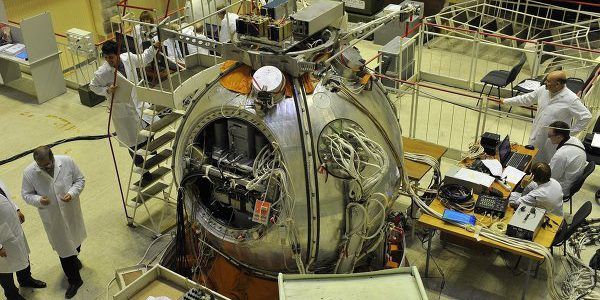
Roscosmos has concluded a contract with Progress rocket and space centre for Bion-M2 space device project. With the help of this device Russian scientists are going to study zero-gravity and space radiation impact on living organisms, – Institute for Bio-Medical Problems press office reports.
“We are working on the contract conclusion. – Institute for Bio-Medical Problems Director Deputy Vladimir Sychev said.
New satellite will be sent to space in 2019. This space laboratory will be launched to the altitude of 1000 kilometers above Earth surface, that is two times higher than the altitude of its predecessor Bion-M. This altitude is necessary to collect unique data on solar radiation and space rays impact on living organisms.
“In December Russian Academy of Sciences Space Board determined the list of equipment to be installed onboard the satellite, and approved institute for Bio-Medical Project as main agency developing scientific program”, – Sychev says.
Bion-M1 performed one-month flight in spring 2013. Onboard the satellite there was a hundred of living organisms including Mongolian gerbils, mice, geckoes, fish, freshwater maxillopods, seaweeds, etc.
It turned out that most passengers of the satellite didn’t survive the flight due to the technical failure: all of 8 gerbils, 29 of 25 mice, fish died. Geckoes and snails survived anyway Bion-M1 fulfilled its research program Institute for Bio-Medical problems representatives reported since up to half of “passengers” were supposed to survive.







Latest news:

Jul 2, 2025


-
This error message is only visible to WordPress admins
Error: API requests are being delayed. New posts will not be retrieved.
There may be an issue with the Instagram access token that you are using. Your server might also be unable to connect to Instagram at this time.
Error: API requests are being delayed for this account. New posts will not be retrieved.
There may be an issue with the Instagram access token that you are using. Your server might also be unable to connect to Instagram at this time.