

Russia offers space tourists flights to the International Space Station under an expanded program with an extended stay on the ISS – up to one month, said Dmitry Loskutov, General Director of Glavkosmos (a Roscosmos enterprise).
Loskutov spoke at the Global Satellite & Space Show online forum. His presentation contains a list of “additional options” that a space tourist can order when flying into space. Among them is a “flight to the ISS for a non-standard period of up to 30 days.” At the same time, it is noted that a standard tourist flight to the ISS lasts up to 10 days.
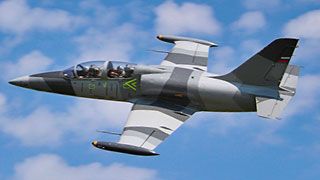
Other additional options include spacewalk, preparation for zero-gravity flight using special aircraft, development and assistance in the implementation of its own scientific program in orbit, and the creation of a special power kit.
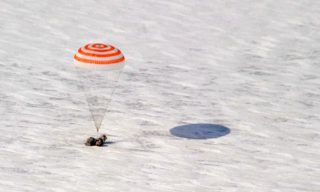
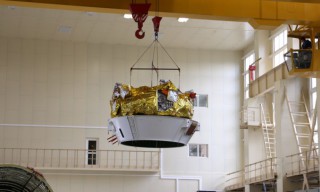
One of these additional options is the Soyuz Lander After Returning to Earth, that is, the opportunity for space tourists to buy out the spacecraft’s descent module, which will return them from the International Space Station to Earth.
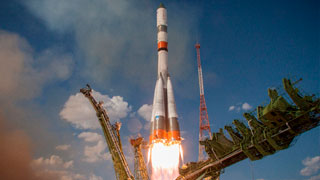
The standard space tourist program includes a medical examination, training at Star City, a direct flight to the ISS and return to Earth, as well as search and rescue services for the returning tourist.
Earlier, the Russian office of Space Adventures, an American company that also deals with tourist flights on Russian spacecraft, reported that contracts have been signed with space tourists who are scheduled to travel to the ISS on Soyuz in 2021. Officially, the cost of the flight was not disclosed, but in 2001-2009, when seven tourists were delivered to the ISS on Soyuz contracts with Space Adventures, they were asked from 20 to 50 million dollars for a ten-day flight.