July 21, 2014

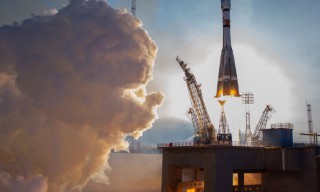
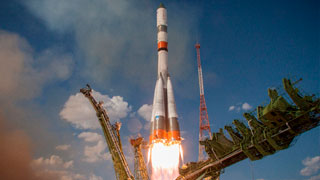
Russian biosatellite Foton-M with 5 geckoes, fruit flies, higher plants’ seeds and other biological materials onboard was launched with the help of Soyuz-2.1a booster from Baikonur spaceport, – Roscosmos spokesman reported.

The satellite was launched on July 19, at 00.50, Moscow time from 31 launchpad of Baikonur spaceport and separated from the booster at 00.58, Moscow time. Foron-M is expected to work on the orbit for about 2 months and after that its biocapsule with living organisms will return back to the Earth.

According to the Institute for Biomedical problems of Russian Academy of sciences most Foton-M scientific equipment of designed for experiments on living organisms.

“We will continue experiments on living organisms. This time we send to space 5 geckoes, fruit flights, microorganisms and higher plants’ seeds. Besides the experiments on gravitational physiology, exobiology, biological technology, radiation biology and radiation dosimetry”, – Institute for Biomedical Problems representative stated.

According to him it is not he first time we send geckoes to space but all the previous experiments lasted from two weeks to one month.  For example, 15 geckoes performed 30-days flight onboard Bion-M satellite last year. That time Bion- 1M descent capsule with mice, geckoes, fish, plants and artificial meteorites landed in Orenburg region, but most animals didn’t survive.
More from this category:
September 13, 2021

On September 9, 2021, the 65th long-term ISS expedition flight engineers Roscosmos cosmonauts Oleg Novitskiy and Pyotr Dubrov egressed the station for the 50th planned…

full story
May 24, 2021

On May 21, 2021 the specialists of Roscosmos subsidiaries – the Vostochny Space Center (a branch of the Center for Operation of Ground-Based Space Infrastructure…

full story
November 29, 2016

Soyuz-U booster with new series cargo vehicle Soyuz MS-04 was rolled out from the integration building and erected on pad №1 (Gagarin launchpad). Specialists of…

full story
June 13, 2013

The life of human in space is very much different from life on the Earth’s surface. The greatest difference is of course the weightlessness effect….

full story
May 15, 2019

On May 14, the “Fregat” upper stage arrived at the Vostochny space center. Specialists of the Vostochny Space Center (TSENKI company branch) performed its acceptance…

full story
July 14, 2014

International space station orbit was adjusted on July 11, 2014. According to MCC ballistic and navigational support service crews Zvezda service module thrusters were ignited…

full story
March 10, 2015

Russian cosmonaut Gennady Padalka expects to set up a new record spending 1000 days on the orbit,  as he told the journalists at press-conference taking…

full story
January 19, 2014

Medium altitude of the ISS orbit was increased by about 2 km with the help of docked with the ISS Progress M-221M cargo vehicle thrusters,…

full story