
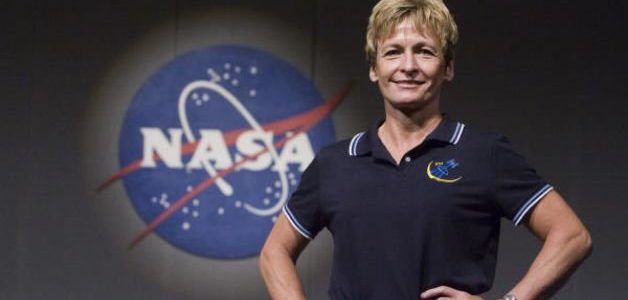
On Monday, June 15, NASA astronaut Peggy Witson training program was presented to GCTC. Woman-astronaut will be passing trainings together with Roscosmos cosmonaut Oleg Novitsky and ESA astronaut Thomas Pesquet as a part of ISS-50/51 mission crew going to the ISS in November 2016. Preflight training will end up by examination session and complex examination training.
Peggy Witson has already performed two flights onboard the ISS/ In April 2008 during her second flight she was ISS-16 mission commander. For these two flights she has spent 377 days in space, besides she performed 6 spacewalks with 39 hours and 46 minutes total duration.
ISS-5 mission started on June 5, 2002, onboard Endeavor shuttle STS-111.
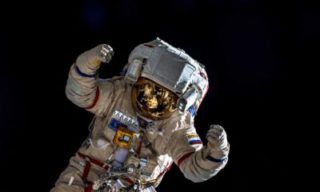
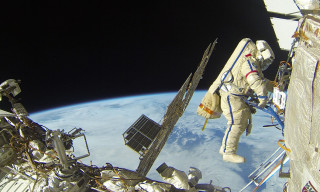
The crew successfully docked with with the ISS on June 7, 2002. During her 6-months stay onboard Witson installed Mobile Basic System (MBS). S1 truss and P1 truss segments using ISS manipulator, performed a spacewalk (in Orlan EVA spacesuit) lasting for 4 hours 25 minutes During the spacewalk she installed micrometeorites protection on Zvezda service module an plugged in Glavbox science equipment stand.
The crew got back to the Earth onboard Endeavour shuttle STS-113 on December 7, 2002. The flight lasted for 185 days.
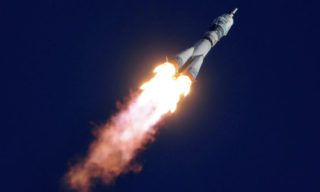
ISS-16 mission crew comprised Yuri Malenchenko and Peggy Witson and went to space on October 10, 2007 onboard Soyuz TMA-11 spacecraft, the docking took place on October 12, 2007. Peggy Witson performed five spacewalks conducting assembling and station maintenance operations.
On April 2008 Yuri Malenchenko and Peggy Witson undocked Soyuz from the station and returned to the Earth. The flight lasted for 192 days.
In the period from October 2009 to July 2012 Peggy was NASA astronaut corps commander in charge of ISS crews preflight training and flight support.
At the Meeting of Interdepartmental commission on cosmonauts selection and appointment taking place on December 16, 2014, Peggy Wilson was approved as a ISS-48/48 mission back up crew member and ISS-50/51 main crew member.