February 26, 2014
Categories: ISS, JAXA, Roscosmos, Science

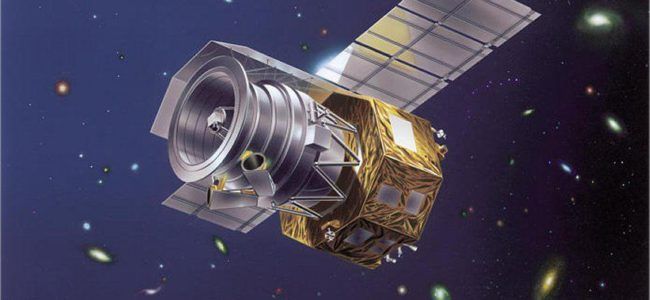
Roscosmos and JAXA representatives started working on Russian and Japanese space telescopes projects uniting.

Both telescopes are designed to explore extragalactic space rays. The devices supposed to be installed on the ISS have to record glowing tracks formed by high-energy particles entering the atmosphere. The main object to be explored will be ultimate energy particles (that is the particles with GZK limit energy).

The key difference between the two telescopes is that JEM-EUSO will use lenses for focusing while the Russian one form the picture with the help of a mirror. The joint project will combine these approaches with Japanese party represented by RIKEN Institute developing optical devices and image sensors at that and Russian party creating the mirror and other parts of the telescope.

According to the senior scientist of Institute of Nuclear Physics of Lomonosov Moscow State University Pavel Klimov the details of the program how to unite two independent projects are being developed at the present time by joint working group. The most conservative variant of program implementation stipulates for full-size mirror being the main part of the telescope while the lens increasing the viewing angle from 7 to 14 degrees will be installed between the mirror and photon detector. The other variant suggests dividing the device into three separate telescopes thus increasing the view.

The dates of device launch to the ISS are not stated yet and the final plan of the project is not confirmed either.
More from this category:
December 11, 2019

At the NPO “Energomash” (part of Roscosmos State Corporation) on December 6, 2019 representatives of the American company “Orbital Sciences Corporation” signed the documents for…

full story
August 21, 2014

According to the ordiring party’s request the launch of Soyuz-ST-B booster with Fregat-M upper stage and two European Galileo FOC space devices from Guiana Space…

full story
March 29, 2016

Aerospace indstry specialists completed general assembling of Soyuz-2.1a booster that is to launch new Russian cargo vehicle Progress MS-02 on March 31, – Roscosmos spokesman…

full story
May 9, 2022

Dear friends, dear compatriots! We are Roscosmos cosmonauts Oleg Artemiev, Denis Matveev and Sergey Korsakov. We congratulate you on the Victory Day in the Great…

full story
June 24, 2014

The cosmonauts will be having water survival trainings on the basis of # 179 Ministry of Emergency Situations Centre (situated in Noginsk city, Moscow region)…

full story
November 5, 2013

Soyuz-FG booster with Soyuz TMA-11M manned spacecraft was rolled out from integration building and installed onto #1 launchpad (“Gagarin launch”) of Baikonur spaceport, – Roscosmos…

full story
May 7, 2013

According to RIA-Novosti, light class booster “Angara” launch is planned for mid-2014, and by the end of the next year – the launch of its…

full story
February 4, 2015

New Russian space observatory Millimetron is to be sent to the orbit in 2025. This unit will help gathering information on Universe processes, learn what…

full story