July 9, 2014

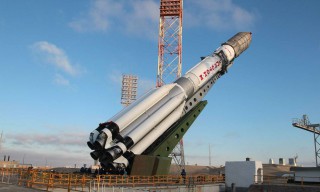
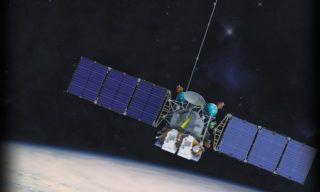
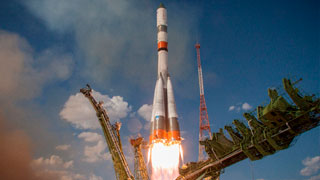
At 15.58 (19.58, Moscow time) on July 8, 2014 Soyuz-2.1b booster with Fregat upper stage  and seven space devices: Russian Meteor-M meteorological satellite, Russian MKA-FKI research satellite, American SkySat-2 Earth remote sensing satellite, Russian DX-1 satellite designed by Dauria Aerosapce Private Company, British TechDemoSat-1  Earth remote sensing satellite, British UKube-1 satellite designed for research and educational purposes, Norwegian AISSAT-2 nano satellite was successfully launched from #31 launching pad of Baikonur spaceport.

According to the time schedule all satellites were successfully set into target orbits.
More from this category:
June 26, 2013

Russian Soyuz ST-V booster launched from European Kourou cosmodrome in French Guiana set O3b Networks satellites providing inexpensive internet access into the orbit. The process…

full story
July 9, 2020

Today, on July 9, 2020, in accordance with the International Space Station (ISS) flight program, the mission of the Progress MS-13 transport cargo vehicle was…

full story
August 22, 2014

Russian Space Agency plans to design a space device to clean geostationary orbit from dead satellites and upper stages. According to the spokesman Roscosmos is…

full story
June 9, 2015

ISS orbit was successfully adjusted on June 8, 2015 to avoid space debris. Progress M-26M cargo vehicle thrusters were ignited at 22.58, Moscow time, and…

full story
September 2, 2013

The exact date  of new multipurpose laboratory “Nauka”module  launch to the ISS is finaly announced. “October this year according to RSC Energia plans the module…

full story
April 22, 2015

Today, on April 22, the first Russian woman working onboard the ISS and the fourth woman-cosmonaut in the history of Soviet and Russian Cosmonautics Elena…

full story
July 9, 2019

Today, on July 9, 2019, the “Proton-M” launch vehicle with the Russian “Spectrum-RG” observatory was delivered to the launch complex of the site № 81…

full story
January 25, 2021

At the Baikonur Cosmodrome, Yuzhny Space Center specialists (a branch of the Center for Ground-Based Space Infrastructure Facilities Operation, part of Roscosmos) started fueling the…

full story